Judicial certificates of relief: A national survey

*Update (9/8/20): the full national report, “The Many Roads to Reintegration,” is now available.

Last month we announced the forthcoming publication of a national report surveying mechanisms for restoring rights and opportunities following arrest or conviction, titled “The Many Roads to Reintegration.” So far, we have previewed the report in draft chapters covering “loss and restoration of voting and firearms rights” and “fair employment & occupational licensing,” as well as several sections of the chapter on record relief, a term comprising the various remedies that revise or supplement a person’s criminal record to reduce or eliminate barriers to opportunity in civil society. The sections published so far are “pardon policy and practice,” “deferred adjudication,” and “non-conviction records.”

This installment of the record relief chapter concerns judicial certificates, orders that courts or parole boards in a dozen states are authorized to issue to convicted individuals with the dual purpose of avoiding mandatory collateral consequences and helping to overcome discretionary ones. Later this week we will publish the final major section of this chapter, on conviction relief via expungement, sealing, and set-aside.

We expect to publish the entire “Many Roads” report by the end of the month. In addition to a series of “report cards” on specific relief mechanisms, it will include an ranking of states for the effectiveness of their overall combined relief schemes.

A PDF of the section on judicial certificates is available here. The full text follows, with end notes.
Read more

Non-conviction records: A national survey

*Update (9/8/20): the full national report, “The Many Roads to Reintegration,” is now available.

In July, we announced the forthcoming publication of a national report surveying mechanisms for restoring rights and opportunities following arrest or conviction, titled “The Many Roads to Reintegration.” So far, we have previewed the report by publishing draft chapters covering “loss and restoration of voting and firearms rights” and “fair employment & occupational licensing.” We also published “pardon policy and practice” and “deferred adjudication” sections of the chapter on record relief, a term comprising the various remedies that revise or supplement a person’s criminal record to reduce or eliminate barriers to opportunity in civil society.

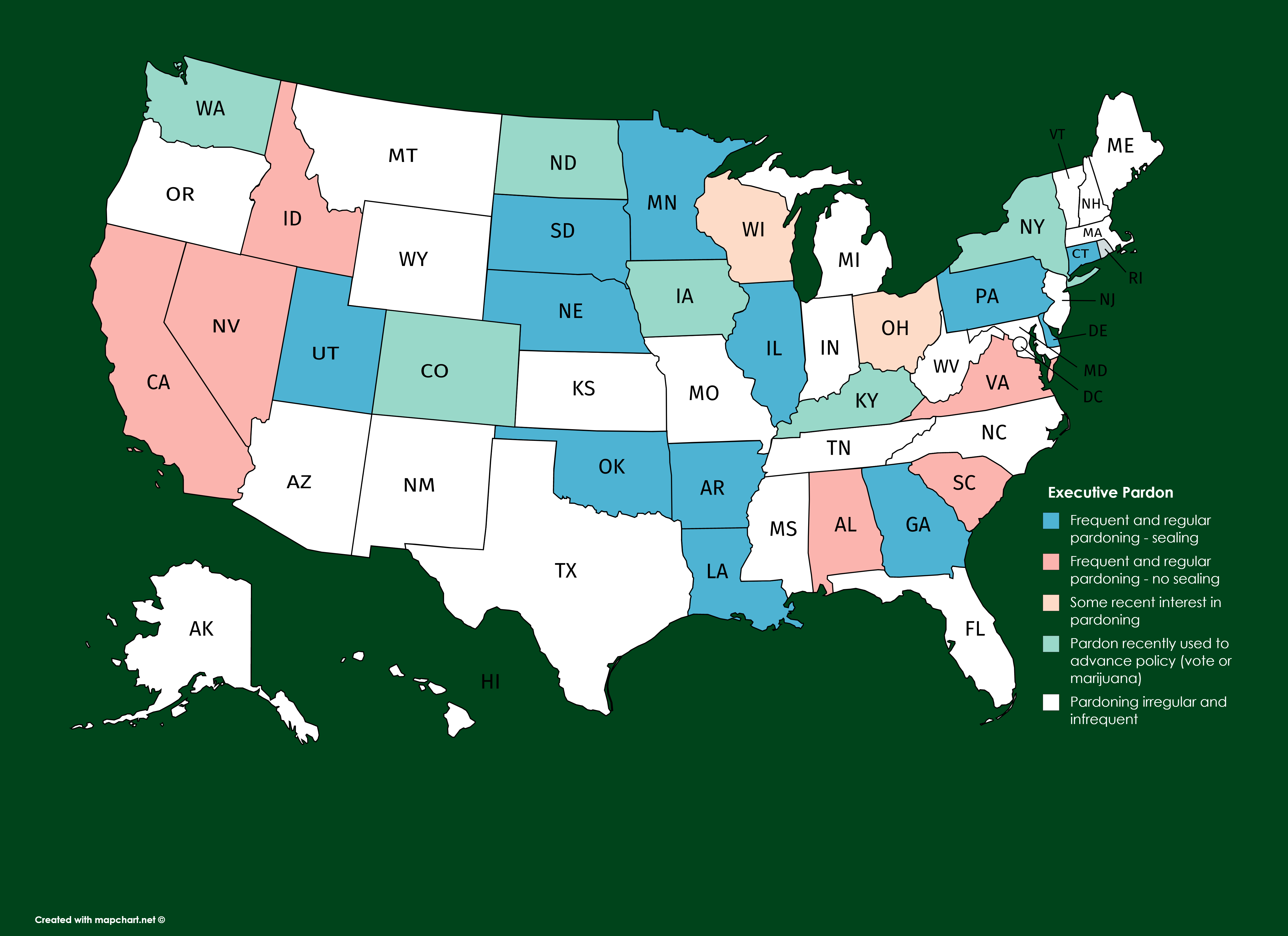
Today we are publishing a third section of the record relief chapter on non-conviction records: arrest and court records that can create lifelong barriers in employment, housing, and other areas of daily life. More than half the states still require a restrictive and burdensome court procedure to expunge or seal non-convictions. Our Model Law on Non-Conviction Records recommends automatic expungement of these records, an approach that has been enacted in 17 states. Later this week we will publish additional sections of this chapter, on conviction relief, judicial certificates, and juvenile records. We expect to publish the entire “Many Roads” report by the end of the month.

A PDF of the section on non-convictions is available here. The full text follows, with end notes.
Read more

Deferred adjudication: A national survey

*Update (9/8/20): the full national report, “The Many Roads to Reintegration,” is now available.

In July, we announced the forthcoming publication of a national report surveying mechanisms for restoring rights and opportunities following arrest or conviction, titled “The Many Roads to Reintegration.” So far, we have previewed the report by publishing draft chapters covering “loss and restoration of voting and firearms rights” and “fair employment & occupational licensing.” Yesterday we published “pardon policy and practice,” a section of the chapter on record relief, a term comprising the various remedies that revise or supplement a person’s criminal record to reduce or eliminate barriers to opportunity in civil society.

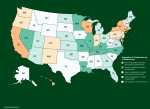
Today we are publishing a second section of the record relief chapter on deferred adjudication, a disposition whose goal is to divert individuals away from a conviction record at the front end of a criminal case. Next week we will publish additional sections of this chapter, on expungement, record-sealing, set-aside, judicial certificates, and juvenile records. We expect to publish the entire “Many Roads” report by the end of the month.

A PDF of the section on deferred adjudication is available here. The full text follows, with end notes.
Read more

Pardon policy & practice: A national survey

*Update (9/8/20): the full national report, “The Many Roads to Reintegration,” is now available.

In July, we announced the forthcoming publication of a national report surveying mechanisms for restoring rights and opportunities following arrest or conviction, titled “The Many Roads to Reintegration.”  So far, we have previewed the report by publishing draft sections covering “loss and restoration of voting and firearms rights” and “fair employment & occupational licensing.”  Today we publish a draft section on pardon, the ultimate expression of forgiveness and reconciliation from the sovereign that secured the conviction.  While pardon is no longer routinely available in all or even most U.S. jurisdictions, in the 18 states where post-sentence pardoning is frequent and regular it provides an important record remedy – frequently the only remedy – for those convicted of more serious offenses, for those seeking restoration of firearms rights, and for non-citizens seeking to avoid conviction-related immigration consequences.

This section on “pardon policy & practice” is part of a chapter on “record relief.”  This chapter deals with any remedy that revises or supplements a person’s criminal record to reduce or eliminate barriers to opportunity in civil society.  Later this week, we will publish additional sections of the record relief chapter on deferred adjudication and judicial certificates, followed next week by sections on expungement, record-sealing, and set-aside.  We expect to publish the entire “Many Roads” report by the end of the month.

A PDF of this section is available here.  The full text follows, with end notes.
Read more

Fair chance employment and occupational licensing: A national survey

*Update (9/8/20): the full national report, “The Many Roads to Reintegration,” is now available.

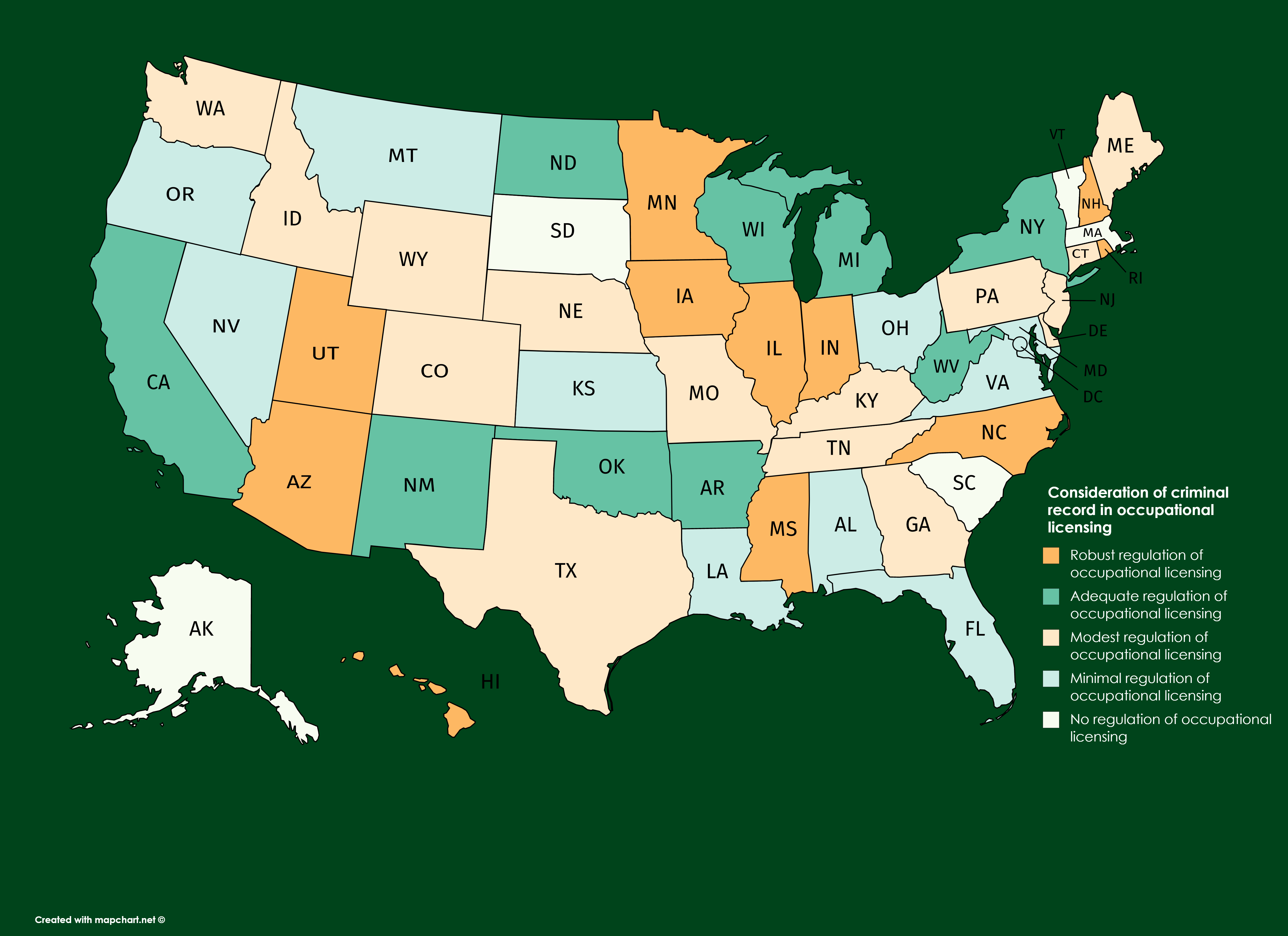
Last week we announced the forthcoming publication of a national report surveying mechanisms for restoring rights and opportunities following arrest or conviction, titled “The Many Roads to Reintegration.”  Also last week, we published the first chapter of that report on loss and restoration of voting and firearms rights.  Today we publish a near-final draft of the third chapter of the “Many Roads” report, dealing with laws that systematically regulate how criminal record is considered in the workplace, by employers and by occupational licensing authorities.  Next week we expect to publish the second chapter of the report on “record relief” (including record-sealing, pardon, and judicial certificates).  The research, drawn from CCRC’s Restoration of Rights Project, reveals a trend in the states toward restricting the power of occupational licensing agencies to reject applicants with criminal records based upon factors not directly related to their qualifications.

There has also been marked progress in extending fair chance employment laws, primarily through limiting inquiry into criminal record in the early stages of the hiring process and setting standards for later consideration of the record.  These trends, which have accelerated in the past three years, recall and in many cases build on an earlier period of criminal record reforms in the 1970s.  At the conclusion of the chapter are report cards with color-coded maps ranking state laws by specific criteria, to facilitate comparisons between and among states.

There are some surprises.  For one thing, there is not a particularly strong correlation between how states rate in each of the two areas.  That is, states that have a robust system of fair chance employment laws may not and frequently do not have a similarly strong system for regulating how occupational licensing agencies treat people with a criminal record.  In fact, only two states (Illinois and Minnesota) scored at the top of both categories.  Three other states that scored well on employment also scored reasonably well on occupational licensing (California, New York, and Wisconsin), but the last two jurisdictions in the top employment category (Hawaii and the District of Columbia) scored poorly on occupational licensing.  Conversely, four states that ranked in the top tier for occupational licensing had no law at all regulating consideration of criminal record in employment (Iowa, Mississippi, New Hampshire, and North Carolina) and two others had only minimal regulation of public employment (Indiana and Utah).  Three states had no law at all governing either employment or occupational licensing (Alaska, South Carolina, and South Dakota).

Another result that may surprise those who have not been following recent developments in this area of the law, is that high marks for reining in the exclusionary policies of licensing boards go to some states not ordinarily considered politically and socially progressive.  The unexpectedly strong performance of some states in regulating occupational licensing boards may be attributable to antipathy toward government interference in free markets as well as an interest in efficiency and fairness.

A PDF of this chapter is available here.  The full text follows, with end notes. Coming next, the report’s chapter on “Record Relief.”
Read more

Who Must Pay to Regain the Vote? A 50-State Survey

We are pleased to publish a new 50-state report on how unpaid court debt blocks restoration of voting rights lost as a result of conviction:

Who Must Pay to Regain the Vote? A 50-State Survey

This report examines the extent to which state reenfranchisement laws consider payment of legal financial obligations (LFOs), including fines, fees, and restitution, in determining whether and when to restore voting rights to people disenfranchised due to a felony conviction.

This issue has come to the fore as a result of the high-stakes federal litigation in Florida over that state’s 2018 ballot initiative, which many expected would restore voting rights to more than a million people disenfranchised because of their criminal record, in some cases for crimes that occurred decades ago. However, the initiative has been interpreted by Florida’s legislature and supreme court to condition reenfranchisement on payment of all outstanding fines, fees, costs, and restitution, which threatens to drastically limit its anticipated reach.

After a group of voters and organizations sued, a federal judge found this “pay-to-vote” system unconstitutional. The case is currently on appeal in the U.S. Court of Appeals for the Eleventh Circuit. CCRC expects to file an amicus brief next week that will include an abbreviated version of this report. Our brief will address the claim that many states have reenfranchisement schemes like Florida’s, and that the trial court’s decision would therefore cast doubt on a widespread national practice. But our research finds that very few states have laws like Florida’s that indefinitely deny reenfranchisement based on any unpaid debt related to a disqualifying conviction. In fact, only two other states, Alabama and Arkansas, share the specifics of Florida’s approach.

The issues in the Florida case and the findings of our report are detailed below.

Read more

Loss and restoration of voting and firearms rights after conviction: A national survey

*Update (9/8/20): the full national report, “The Many Roads to Reintegration,” is now available.

Earlier today we announced the forthcoming publication of a national report on mechanisms for restoring rights and opportunities following arrest or conviction, titled “The Many Roads to Reintegration.”  As promised, here is the first chapter of that report on loss and restoration of voting and firearms rights, a subject that needs little or no introduction.  The research, drawn from the Restoration of Rights Project, reveals a trend since 2015 toward expanding opportunities to regain the vote that has accelerated just in the past two years.

This trend seems particularly timely in light of the pending constitutional challenge to Florida’s restoration system, which raises the question whether the state may constitutionally require people to pay outstanding legal financial obligations (LFOs) before being allowed to vote, even if they cannot afford to do so.  There are now only two states in addition to Florida in which the vote is permanently lost for those unable to pay all LFOs associated with a disqualifying conviction.  An additional seven states permanently deny the vote for those unable to pay certain types of LFOs.  (Early next week, we will publish a report surveying state laws and practices on this issue, which will be included in abbreviated form in an amicus brief we plan to file in the court of appeals in support of the Florida plaintiffs.)

In contrast to voting rights law, there has been almost no change in the past half dozen years in how state and federal law treats firearms restoration after conviction.  In most states, firearms dispossession remains indefinite for anyone convicted of a felony, and restoration depends upon petitioning a court for discretionary relief or asking for a pardon. In 11 of the 26 states in which all firearms rights are permanently lost upon conviction of any felony, and for those with a federal conviction, a pardon is the exclusive restoration mechanism.

A PDF of this chapter is available here.  Coming next week, the report’s chapter on “Employment and Occupational Licensing.”

Read more

The Many Roads to Reintegration: A national survey of laws restoring rights and opportunities after arrest or conviction

*Update (9/8/20): the full national report, “The Many Roads to Reintegration,” is now available.

We are pleased to announce that this summer we will publish a national report on the various approaches to restoration of rights and opportunities following arrest or conviction being implemented throughout the United States.  Over the next few weeks, we will preview sections of the report on this site.

Titled “The Many Roads to Reintegration,” the report revises and substantially expands our earlier national report last updated in August 2018.  Just in the last two years there has been a veritable torrent of law-making aimed at mitigating or avoiding the collateral consequences of a criminal record, which we have chronicled in our annual reports on new legislation. We hope that this national report will allow us to take stock of how far we’ve come as a country in the past several years, and show us where we need to go.  We envision it as a kind of summing up at the end of the beginning of this new Age of Record Reform in which we find ourselves.

Later today, we will post the first chapter on “Loss and Restoration of Voting and Firearms Rights.”  Next up, next week, will be the third chapter on fair employment and occupational licensing.  The final piece of the report, which we expect will be ready for publication by the second week in August, will deal with the myriad approaches to record relief being developed and implemented across the country, including executive pardon, legislative “clean slate” laws, and judicial expungement.  We expect to publish the whole report, complete with appendices, by mid-to-late August.  We welcome feedback on the chapters as we publish them, so that we can make improvements before the entire report is final.

The Table of Contents is published below to give our audience a picture of what to expect when the report is published in August.

Read more

Report card on licensing laws finds progress, but still a way to go

The Institute for Justice, a leader in advocacy for reforming occupational licensing laws, has just issued a major new report grading the states on the opportunities they give to people with a criminal record.  The press release and links are below.  We are not at all surprised that Indiana got the best grade—or that so many states “tied for dead last.” Coincidentally, the legislatures in Iowa, Missouri, and Pennsylvania have in recent days sent broad new occupational licensing reform measures to their governors’ desks, so at least three states seem poised to climb out of IJ’s basement.    

Stay tuned for an update of our own survey of employment and licensing laws nationwide, which will be part of the revised Forgiving and Forgetting report that we expect to issue in a few weeks.  In the meantime, many congratulations to IJ for its pioneering law reform work on behalf of people with a record.

IJ press release:

Barred from Working: People with Criminal Records Are Unfairly Denied Licenses to Work

New Nationwide Report Offers the Most Comprehensive Look at the Occupational Licensing Barriers Facing Ex-Offenders

Arlington, Va.—Even as states debate opening the economy back up, millions of Americans with criminal records are still locked out of the job market. Today, nearly one in five workers needs a license to work, while one in three Americans has a criminal record of some kind.

Providing the most in-depth and up-to-date look at this intersection between occupational licensing and the criminal-justice system, a new report from the Institute for Justice (IJ), Barred from Working, analyzes and grades the legal protections offered to ex-offenders who apply for licenses to work.

Many state laws fail to make the grade: just nine states received a B- or better. Indiana ranked as the best state in the nation, earning the report’s only A grade. Meanwhile, six states—Alabama, Alaska, Nevada, Rhode Island, South Dakota, and Vermont—all tied for dead last due to their utter lack of protections for former felons seeking licenses.

“An honest living is one of the best ways to prevent re-offending. But strict occupational licensing requirements make it harder for ex-offenders to find work,” said IJ Legislative Analyst Nick Sibilla, who authored the report. “Undoubtedly, some license restrictions make sense: No one wants child molesters working in daycare centers or school bus drivers with DUIs. But as this report shows, many licensing barriers have little basis in common sense or public safety and unfairly deny a fresh start to countless Americans.”

Read more

Upgrades to the Restoration of Rights Project

We are pleased to announce the completion of a major project to upgrade our flagship resource, the Restoration of Rights Project (RRP).  The RRP is a free on-line compendium of legal research that describes and analyzes the laws and practices relating to criminal record relief in the United States.  The improvements we have made will make it easier for our readers to gain both a snapshot and more detailed understanding of how record relief laws and policies operate within each of the 50 states, D.C., 2 territories, and the federal system.  They will also facilitate comparisons of how different states address various types of relief, producing a national-level picture against which each state can measure its progress.

This major undertaking was a collaboration between CCRC staff and four students at Yale Law School: Jordan Dannenberg, Kallie Klein, Jackson Skeen, and Tor Tarantola.  We thank these students, as well as YLS Professor Kate Stith, for their excellent contributions to our mission of promoting public engagement on the issues raised by the collateral consequences of arrest or conviction.

The state-by-state profiles, summaries and 50-state comparison charts from the RRP are what we rely on in preparing periodic and year-end summary reports on new legislation, which we track and add to the RRP in real time throughout the year.  The research and analysis in the RRP also informs our commentary on everything from new court decisions and scholarship to politics and practice, as well as the amicus briefs we file from time to time in significant litigation.  It is the foundation of our work on model legislation.  The RRP provided the raw material for a national overview report of record relief laws and policies, Forgiving and Forgetting in American Justice, which was last revised in August 2018.  Because of this report’s value in identifying overall patterns and emerging trends, we are already at work bringing it up to date with the more than 200 new laws passed since it was last revised.

Through the upgrade project we reorganized and expanded the RRP in three major ways.

Read more

1 2 3 4 5 6 9