Category: Immigration

Second Chance Month: A Federal Reintegration Agenda

In 2017, Prison Fellowship declared April Second Chance Month for the first time. The designation has since gained support from Congress, the White House, state and local bodies, and nongovernmental organizations, as an opportunity to raise awareness about the collateral consequences of arrest or conviction along with the importance of providing second-chance opportunities for people with a record to reintegrate into society.
CCRC’s flagship resource, the Restoration of Rights Project provides 50-state resources detailing current law and practice for four types of second-chance remedies: (1) restoration of civil and firearms rights; (2) pardoning; (3) expungement, sealing, and other record relief; and (4) limits on consideration of criminal records in employment and occupational licensing. Our annual reports on new legislation document the astonishing pace of state reform action on these issue since 2013. We are proud to see these resources utilized by impacted individuals, attorneys, advocates, journalists, scholars, lawmakers, courts, and others to understand second-chance remedies, pursue relief, and bring about reforms.

President Biden’s Proclamation on Second Chance Month declares that the criminal justice system must offer “meaningful opportunities for redemption and rehabilitation”:

Every person leaving incarceration should have housing, the opportunity at a decent job, and health care. A person’s conviction history should not unfairly exclude them from employment, occupational licenses, access to credit, public benefits, or the right to vote. Certain criminal records should be expunged and sealed so people can overcome their past.

The President took an important step toward this goal when he directed federal agencies to facilitate voting for those in federal custody or under federal supervision.

During the wave of criminal record reform that began around 2013, every state legislature has taken steps to chip away at the negative effects of a record, thereby supporting opportunities to earn a living, access public benefits, education, and housing, regain voting rights, and otherwise reintegrate into society. Many states have entirely remade their record relief systems—authorizing or expanding expungement, sealing, set-aside, certificates of relief, and/or diversion—and limited the consideration of arrest and conviction records in employment and licensing. State reforms continue to accelerate in 2021.

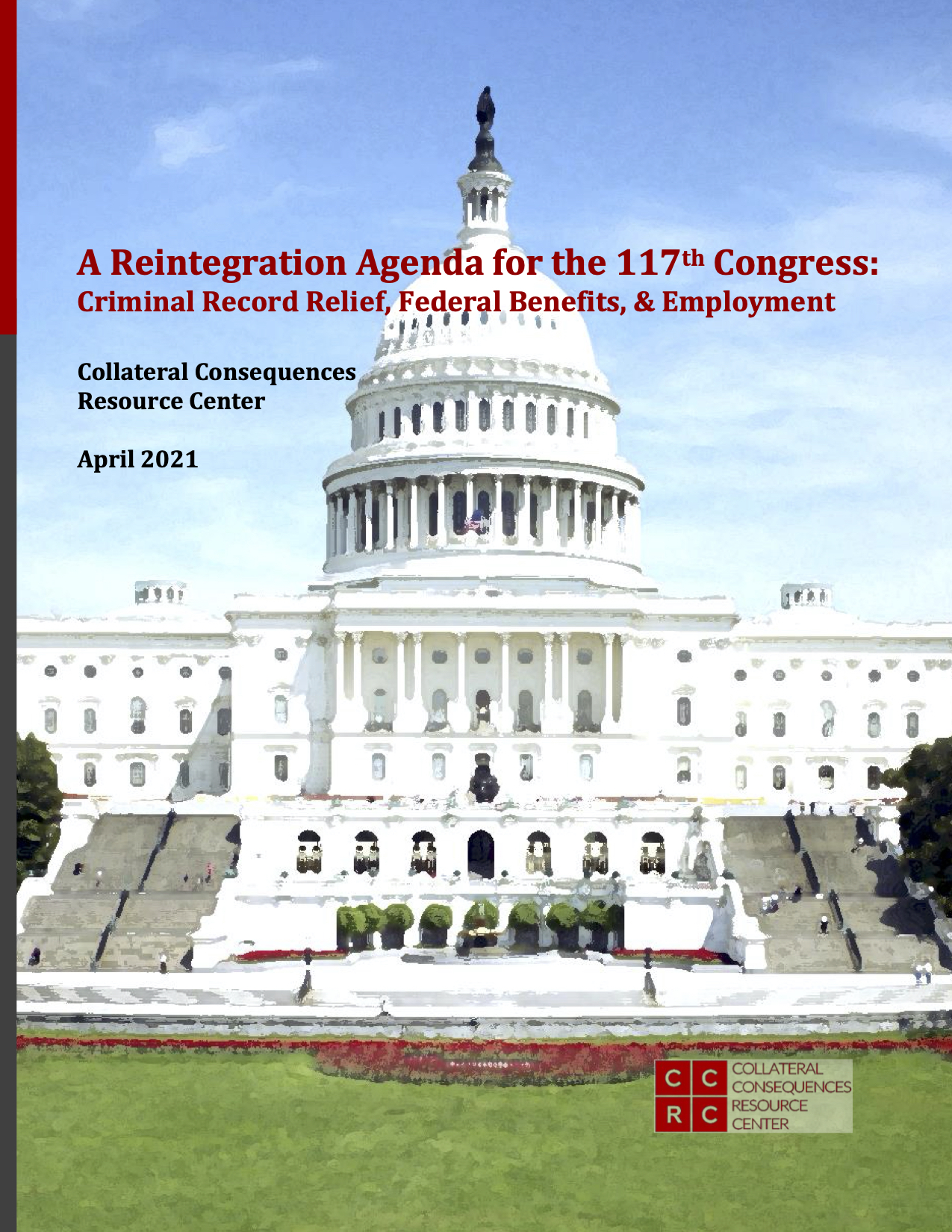
Congress has belatedly become interested in the reintegration agenda, limiting background checks in federal employment and contracting in 2019, and removing some barriers to public benefits in 2020. However, many federal barriers remain, and individuals with federal records have no access to the kind of relief mechanisms now available in most states. Recent controversies over presidential pardoning offer an incentive to wean the federal justice system from its dependence upon presidential action for the sort of routine relief these mechanisms promise.

In honor of Second Chance Month, we recommend that the Biden Administration work with Congress to pursue an ambitious and bipartisan legislative approach to criminal record reforms in the following four areas:

  • Record relief: Authorize federal courts to expunge certain records, grant certificates of relief, and increase use to deferred adjudication; give effect to state relief in federal law; prohibit dissemination of certain records by background screeners and the FBI; and, provide relief from firearms dispossession.
  • Federal public benefits: End record-related restrictions in financial assistance to small businesses, SNAP and TANF benefits, and student aid.
  • Employment & licensing: Establish enforceable standards for consideration of criminal record in federal employment and contracting, and limit record-based restrictions in federally-regulated occupations.
  • Voting rights: Allow voting in federal elections regardless of a person’s criminal record unless currently incarcerated for a felony conviction.

Our full federal agenda details specific measures by which Congress can accomplish these goals.
Legislative Report Card: “The Reintegration Agenda During Pandemic”

CCRC’s new report documents legislative efforts in 2020 to reduce the barriers faced by people with a criminal record in the workplace, at the ballot box, and in many other areas of daily life. In total, 32 states, D.C., and the federal government enacted 106 bills, approved 5 ballot initiatives, and issued 4 executive orders to restore rights and opportunities to people with a record.

Our Legislative Report Card recognizes the most (and least) productive state legislatures last year. Hands down, Michigan was the Reintegration Champion of 2020 with 26 new record reform laws, while Utah was runner-up, and seven other states were commended for their work.

Read more

“The Reintegration Agenda During Pandemic: Criminal Record Reforms in 2020”

In each of the past five years, CCRC has issued an end-of-year report on legislative efforts to reduce the barriers faced by people with a criminal record in the workplace, at the ballot box, and in many other areas of daily life.[i] These reports document the progress of what has become a full-fledged law reform movement to restore individuals’ rights and status following their navigation of the criminal law system.

Our 2020 report, linked here, shows a continuation of this legislative trend. While fewer states enacted fewer laws in 2020 than in the preceding two years, evidently because of the disruptions caused by the pandemic, the fact that there was still considerable progress is testament to a genuine and enduring public commitment to a reintegration agenda.

In 2020, 32 states, the District of Columbia, and the federal government enacted 106 legislative bills, approved 5 ballot initiatives, and issued 4 executive orders to restore rights and opportunities to people with a criminal record.

Read more

Non-conviction records: A national survey

*Update (9/8/20): the full national report, “The Many Roads to Reintegration,” is now available.

In July, we announced the forthcoming publication of a national report surveying mechanisms for restoring rights and opportunities following arrest or conviction, titled “The Many Roads to Reintegration.” So far, we have previewed the report by publishing draft chapters covering “loss and restoration of voting and firearms rights” and “fair employment & occupational licensing.” We also published “pardon policy and practice” and “deferred adjudication” sections of the chapter on record relief, a term comprising the various remedies that revise or supplement a person’s criminal record to reduce or eliminate barriers to opportunity in civil society.

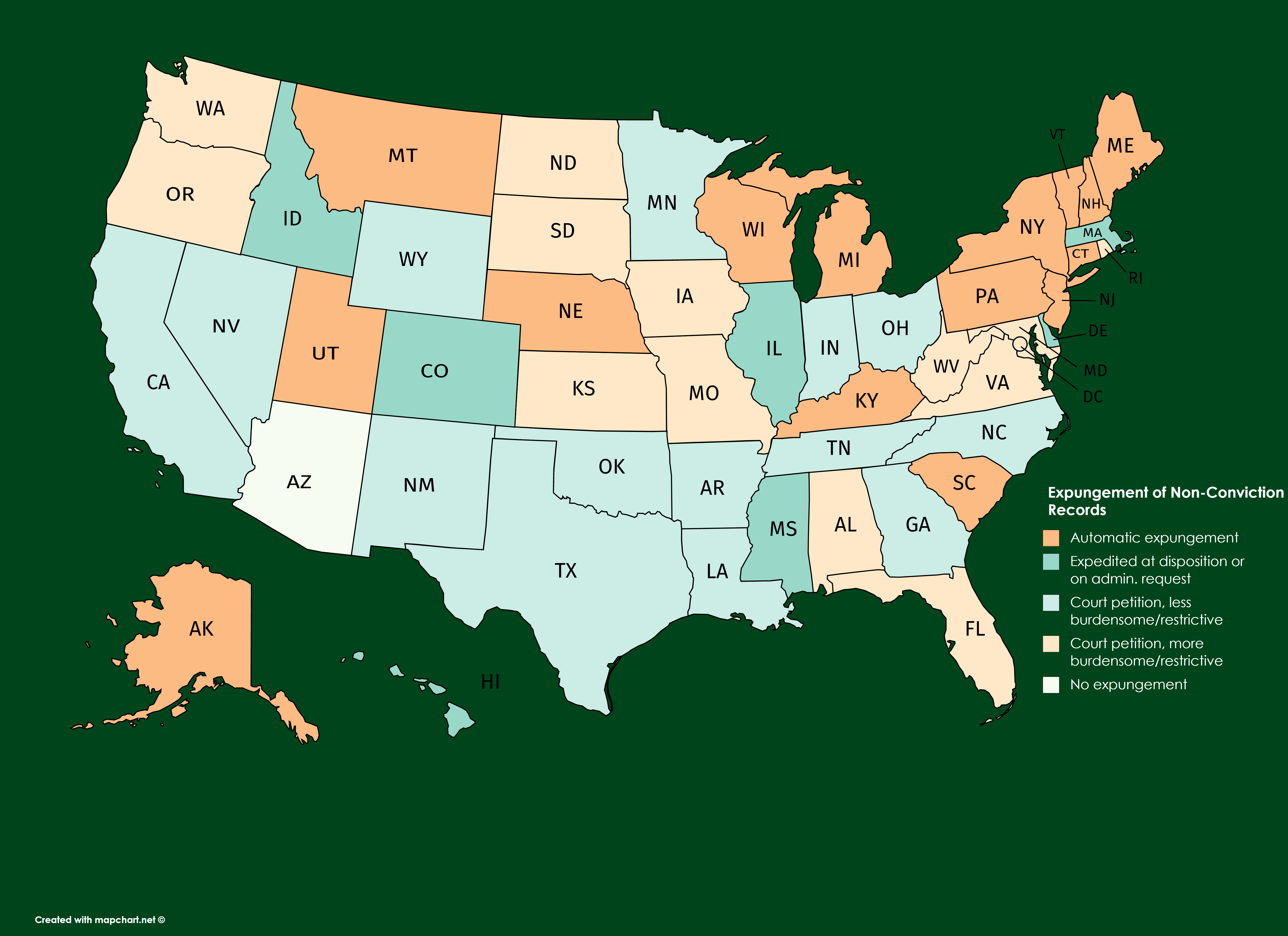
Today we are publishing a third section of the record relief chapter on non-conviction records: arrest and court records that can create lifelong barriers in employment, housing, and other areas of daily life. More than half the states still require a restrictive and burdensome court procedure to expunge or seal non-convictions. Our Model Law on Non-Conviction Records recommends automatic expungement of these records, an approach that has been enacted in 17 states. Later this week we will publish additional sections of this chapter, on conviction relief, judicial certificates, and juvenile records. We expect to publish the entire “Many Roads” report by the end of the month.

A PDF of the section on non-convictions is available here. The full text follows, with end notes.

Read more

CCRC reports on criminal record reforms in 2019

We are pleased to publish our annual report on criminal record reforms enacted during the past calendar year.  This is the fourth in a series of reports since 2016 on new laws aimed at avoiding or mitigating the collateral consequences of arrest and conviction.  This year we have included for the first time a Report Card grading the progress of the most (and least) productive state legislatures in 2019.  The press release accompanying the report is reprinted below:

Report finds record-breaking number of criminal record reforms enacted in 2019

February 17, 2020

Washington, D.C. — The Collateral Consequences Resource Center (CCRC) has released a new report documenting the astonishing number of laws passed in 2019 aimed at promoting reintegration for individuals with a criminal record.  Last year, 43 states, the District of Columbia, and the federal government enacted an extraordinary 153 laws to provide criminal record relief or to alleviate the collateral consequences of arrest and conviction, consequences that may otherwise last a lifetime and frequently have little or no public safety rationale. 

The year 2019 was the most productive legislative year since a wave of “fair chance” reforms began in 2013, a period CCRC has documented in a series of legislative reports (2013-2016, 2017, and 2018). 

CCRC’s 2019 report, titled “Pathways to Reintegration: Criminal Record Reforms in 2019,” is available here.

This report is our first to include a Report Card on how state legislatures performed during the year in advancing the goals of reintegration,” said CCRC Executive Director Margaret Love. “We wanted to recognize New Jersey as Reintegration Champion for having the most consequential legislative record in 2019, including three important new laws authorizing clean slaterecord relief, restoring voting rights, and curbing driver’s license suspensions.

Read more