NOTE: The Fair Chance Act was signed into law on December 20, 2019, as Public Law 116-92, but its provisions will not take effect for a two-year period after enactment.
The Fair Chance to Compete for Jobs Act of 2019 passed the House on December 11 and the Senate on December 17 with bipartisan support, as part of the National Defense Authorization Act of 2020. If signed into law, this would be the first piece of federal legislation in over a decade to provide a degree of relief from discrimination based on criminal record.
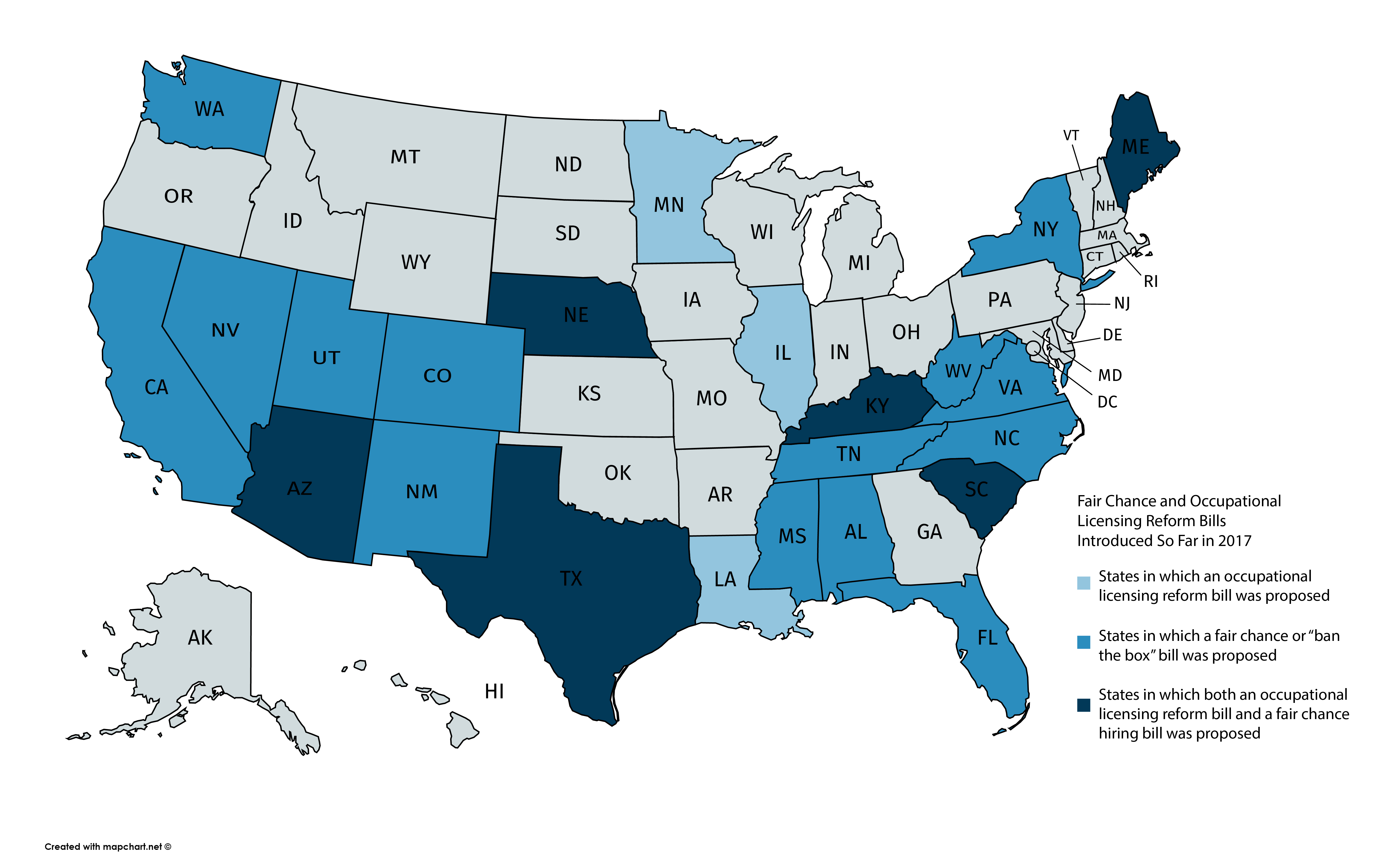
The Fair Chance Act would amend Titles 2, 5 and 28 of the U.S. Code to prohibit employers in all three branches of the federal government, and private-sector federal contractors, from asking about job applicants’ arrest and conviction record until a conditional offer of employment has been extended, an approach that has become known as “ban the box.”
“By requiring employers to hold off on asking job applicants about their conviction records until after a conditional job offer has been made, more than 700,000 Americans will gain a fairer chance at finding employment and securing a better future for themselves and their families,” said Maurice Emsellem, fair chance program director with the National Employment Law Project (NELP).
The Act’s prohibition on pre-offer inquiries extends to “criminal history information,” which is defined to include records that have been “sealed or expunged pursuant to law,” and sealed records of juvenile adjudications. See proposed 5 U.S.C. § 9201(4)(B) and (C). Certain types of employment would be excepted, including employment that otherwise requires inquiry into criminal history, and employment in the military, in law enforcement, and in national security. The Director of OPM is permitted to designate additional exemptions, including positions that involve “interaction with minors, access to sensitive information, or managing financial transactions.” See proposed § 9202(B) and (C). The law contains provisions for enforcement and sanctions.
In additional to extending ban-the-box requirements to employment on federal contracts, including defense contracts, it would also prohibit agency procurement officials from asking persons seeking federal contracts and grants about their criminal history, until an “apparent award” has been made. It is not clear how this law will apply where agency regulations rather than statutes govern consideration of conviction in the award of contracts and grants.
Presumably, once a conditional offer of employment has been extended, the Act would permit agencies and contractors to inquire into the applicant’s criminal history under other applicable authority. For federal executive agencies, general authority to conduct background checks (“for national security and other purposes”) is in 5 U.S.C. § 9101. This section authorizes inquiry about “arrests, indictments, informations, or other formal criminal charges, and any disposition arising therefrom,” as well as “records of a State or locality sealed pursuant to law if such records are accessible by State and local criminal justice agencies for the purpose of conducting background checks.” 5 U.S.C. §9101(a)(2). Thus, post-offer, it would appear that non-conviction records could continue to be the subject of inquiry by federal hiring and contracting authorities, as well as any records that have been sealed or expunged – but only if they are available to criminal justice agencies for background checks. (The Fair Chance Act states that it does not authorize post-offer inquiry into the broader set of records “sealed or expunged pursuant to law” or juvenile records that would be specifically barred from pre-offer inquiry under § 9201. See proposed 5 U.S.C. § 9206.) In some states, including New York and Texas, sealed or expunged non-conviction records are not available to law enforcement for any purpose without a court order, in others such records are available for law enforcement hiring only, and in still others there are no limits on law enforcement access. Our model law on non-conviction records notes that the states are roughly split on the question of routine law enforcement access to expunged or sealed records, and the question appears to be one on which there are valid arguments to be made for either position.
Perhaps, Congress will next take up the question of how agencies and contractors should consider any criminal history that is revealed after inquiry is permitted, including non-conviction records that have been expunged or sealed or convictions that have been pardoned. In this regard, only a minority of states that have enacted ban-the-box laws also have enforceable hiring standards or fair employment laws that bar discrimination based on criminal record. However, among the many benefits of ban-the-box laws is the accountability that comes with knowing that employers will now no longer be possible to hide the fact an applicant’s rejection is based on their criminal record. If adverse decisions must be defended, there should be far fewer of them.
Read more