 The CCRC is pleased to announce the publication of the California Compilation of Collateral Consequences (CCCC), a searchable online database of the restrictions and disqualifications imposed by California statutes and regulations because of an individual’s criminal record. Federal collateral consequences can also be searched through the CCCC database.
This new resource follows on the heels of similar compilations of collateral consequences that CCRC has developed of federal laws and rules, and of two other state systems (Wisconsin and Vermont). The database builds on research originally published in 2014 by the American Bar Association, brought up to date and restructured to permit more precise searches of the specific activities and rights affected by various consequences. A redesigned search function makes it easier to explore the relationship between consequences and their implementing regulations, and among different consequences in state and federal law. Users may access directly complete and current statutory and regulatory text for each consequence.
 On October 14, California Governor Jerry Brown signed into law AB 1008, the
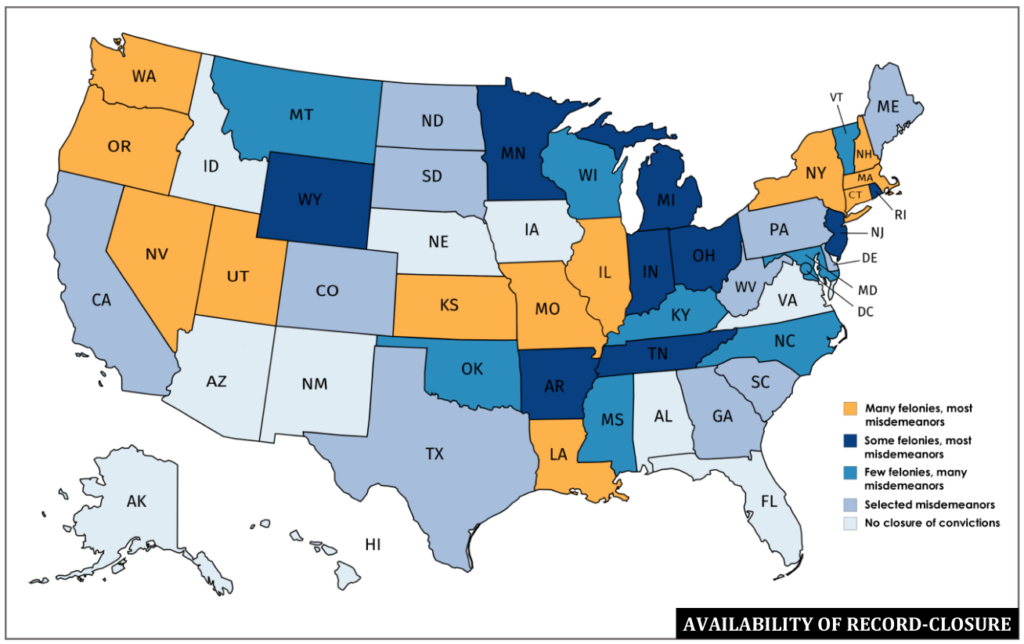 It is not the report’s purpose to recommend any specific approach to relief. Rather, our goal is simply to survey the present legal landscape for the benefit of the policy discussions now underway in legislatures across the country. We are mindful of the fact that very little empirical research has been done to measure outcomes of the various schemes described, many of which are still in their infancy. It is therefore hard to say with any degree of certainty which approach works best to reintegrate individuals with a record into their communities. At the same time, we hope that our description of state relief mechanisms will inform the work of lawyers and other advocates currently working to assist affected individuals in dealing with the lingering burdens imposed by an adverse encounter with the justice system.