 The CCRC is pleased to announce the publication of the California Compilation of Collateral Consequences (CCCC), a searchable online database of the restrictions and disqualifications imposed by California statutes and regulations because of an individual’s criminal record. Federal collateral consequences can also be searched through the CCCC database.
This new resource follows on the heels of similar compilations of collateral consequences that CCRC has developed of federal laws and rules, and of two other state systems (Wisconsin and Vermont). The database builds on research originally published in 2014 by the American Bar Association, brought up to date and restructured to permit more precise searches of the specific activities and rights affected by various consequences. A redesigned search function makes it easier to explore the relationship between consequences and their implementing regulations, and among different consequences in state and federal law. Users may access directly complete and current statutory and regulatory text for each consequence.
 On October 14, California Governor Jerry Brown signed into law AB 1008, the
 A new California
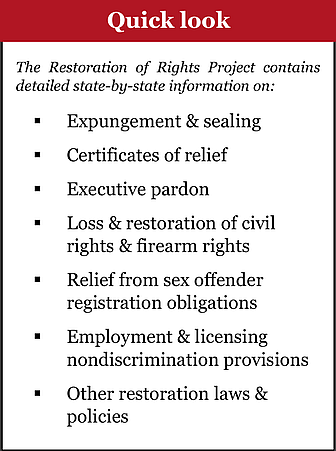 offers state-by-state analyses of the law and practice in each U.S. jurisdiction relating to restoration of rights and status following arrest or conviction. Jurisdictional “profiles” cover areas such as loss and restoration of civil rights and firearms rights, judicial and executive mechanisms for avoiding or mitigating collateral consequences, and provisions addressing non-discrimination in employment and licensing. Each jurisdiction’s information is separately summarized for quick reference.