Tag: firearms

Second Amendment challenges to felon-in-possession laws

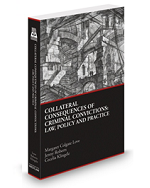
Below is another excerpt from the second edition of Love, Roberts & Klingele, Collateral Consequences of Criminal Conviction: Law, Policy & Practice (West/NACDL, 2d ed. 2015)(forthcoming), this one about challenges to firearms-related collateral consequences based on the constitutional right to bear arms.  Criminal defense lawyers representing clients on felon-in-possession charges, and anyone seeking restoration of firearms rights after conviction, will be interested to know that the government has appealed the district court’s decision in Binderup v. Holder cited in note 8, discussed here a few weeks ago. Binderup is a civil rights action in which the federal court in the Eastern District of Pennsylvania held that the federal felon-in-possession statute could not constitutionally be applied to an individual convicted of a non-violent sex offense in 1998 and sentenced to probation.  This case, the first in which a federal court invalidated a federal statute on Second Amendment grounds, is likely to provide an early opportunity for the court of appeals to consider an issue that most commentators and some courts believe was left unresolved by the Supreme Court in D.C. v. Heller. Alan Gura, who represents Mr. Binderup and argued both Heller and McDonald v. City of Chicago in the Supreme Court, has promised to give us a comment about the Binderup appeal and other pending Second Amendment challenges to felony dispossession laws involving people with dated non-violent convictions.  The tricky and fascinating question presented by these as-applied challenges is what criteria should be used to test whether an individual with a criminal conviction is within the class “historically barred barred from Second Amendment protections” or is “no more dangerous than a typical law-abiding citizen.” U.S. v. Barton, 633 F.3d 168, 174 (3d Cir. 2011). (Note from ML: I was told several years ago that a substantial percentage of the requests for presidential pardon pending in the Justice Department — perhaps as many as half — are from people seeking restoration of firearms privileges.  Judging from my own clientele, this seems about right.  It strikes me as exceedingly strange that people with dated non-violent federal convictions should have to petition the president himself to regain what we may soon learn are their constitutional rights, but that is the situation the Supreme Court left us with its dubious 1995 decision in Beecham v. U.S. and its equally dubious decision 13 years later in Heller.  He should hope the courts will relieve him of this burden, and instruct his Attorney General to stand down on Binderup.)   2:36. Firearms restrictions– Second Amendment challenges to felony dispossession laws In 2008, the Supreme Court held in District of Columbia v. Heller[1] that the Second Amendment confers a personal, fundamental right to possess a firearm, thus opening an entirely new basis for defending against the application of statutes making it a crime for convicted felons to possess firearms.[2] Heller itself anticipated and sought to deflect constitutional challenges to conviction-based firearms restrictions by declaring them to be “longstanding” and “presumptively lawful”[3] but some lower courts have characterized this statement as dictum, and scholars have questioned its historical accuracy.[4] While every federal court to have considered the issue post-Heller has rejected a Second Amendment challenge to the federal statute barring convicted felons from possessing firearms,[5] three federal courts of appeal have suggested that categorical firearms bans may not survive rational basis review as applied to individuals convicted of nonviolent felonies.[6]    In U.S. v. Barton, the Third Circuit noted that a successful “as applied” challenger must present facts about himself and his background that distinguish his circumstances from those of persons historically barred from Second Amendment protections. For instance, a felon convicted of a minor, non-violent crime might show that he is no more dangerous than a typical law-abiding citizen. Similarly, a court might find that a felon whose crime of conviction is decades-old poses no continuing threat to society.[7] The first case to sustain an as-applied challenge to the federal felon-in-possession statute relied upon this language from Barton in finding that an individual convicted of a non-violent sex offense and sentenced to probation sixteen years before could not be prosecuted under it.[8]  Earlier,  the North Carolina Supreme Court relied upon the “right to bear arms” provision of its state constitution in refusing to apply a newly enacted categorical dispossession statute to an individual whose conviction was decades old, whose firearms rights had been restored under an earlier law, and who had long since demonstrated his rehabilitation.[9]   [1] District of Columbia v. Heller, 554 U.S. 570, 128 S. Ct. 2783, 171 L. Ed. 2d 637 (2008). [2] Cf. §3:11 (Substantive challenges based on rights guaranteed by the Constitution—Right to bear arms). [3] See Heller, 554 U.S. at 626-27 (“nothing in our opinion should be taken to cast doubt on longstanding prohibitions on the possession of firearms by felons”). But see id. at 722 (Breyer, J., dissenting) (noting that there is no factual basis for the assertion that such prohibitions are “longstanding”). [4] See Alexander C. Barrett, Taking Aim at Felony Possession, 93 B.U.L. Rev. 163, 194-196 (2013)(“even if some felons were historically understood to be barred from possessing firearms, the common law term ‘felony’ applied to only a few select categories of serious crimes at the time the Second Amendment was ratified, while in modern times, vast categories of ‘non-dangerous’ activities qualify as felonious”); ; Nelson Lund, Two Faces of Judicial Restraint (or Are There More?) in McDonald v. City of Chicago, 63 Fla. L. Rev. 487, 502 (2011) (observing that the dictum was “casually tossed off by Justice Scalia” and has “no basis in prior Supreme Court case law and [was] not supported by evidence of the original meaning of the Second Amendment”); C. Kevin Marshall, Why Can’t Martha Stewart Have a Gun?, 32 Harv. J.L. & Pub. Pol’y 696, 699 (2009) (observing that “a lifetime ban on any felon possessing any firearm is not ‘‘longstanding’’ in America”); Carlton F.W. Larson, Four Exceptions in Search of a Theory: District of Columbia v. Heller and Judicial Ipse Dixit, 60 Hastings L.J. 1371, 1374 (2009) (“[S]o far as I can determine, no colonial or state law in eighteenth-century America formally restricted the ability of felons to own firearms.”); Adam Winkler, Heller’s Catch 22, 56 UCLA L. Rev. 1551, 1561, 1563 (2009) (“Bans on ex-felons possessing firearms were first adopted in the 1920s and 1930s, almost a century and a half after the Founding.”). [5] 18 U.S.C.A. §922(g). [6] See U.S. v. Smoot, 690 F.3d 215, 221 (4th Cir. 2012), cert. denied, 133 S. Ct. 962, 184 L. Ed. 2d 747 (2013) (dispossession would be improper if a litigant could demonstrate that he fell within “the scope of Second Amendment protections for ‘law-abiding responsible citizens to use arms in defense of hearth and home’”); U.S. v. Barton, 633 F.3d 168, 173 (3d Cir. 2011)(“As the Government concedes, Heller’s statement regarding the presumptive validity of felon gun dispossession statutes does not foreclose Barton’s as-applied challenge.”); U.S. v. Williams, 616 F.3d 685, 692 (7th Cir. 2010) (“[T]here must exist the possibility that [a firearm] ban could be unconstitutional in the face of an as-applied challenge.”); see also U.S. v. McCane, 573 F.3d 1037, 1049 (10th Cir. 2009) (Tymkovich, J., concurring) (“Non-violent felons, for example, certainly have the same right to self-defense in their homes as non-felons.”). But see U.S. v. Skoien, 614 F.3d 638 (7th Cir. 2010), cert. denied, 131 S. Ct. 1674, 179 L. Ed. 2d 645 (2011) (en banc) (explaining why §922(g) may constitutionally be applied to an individual repeatedly convicted of misdemeanor domestic violence). [7] U.S. v. Barton, 633 F.3d at 174. [8] See Binderup v. Holder, 2014 U.S. Dist. LEXIS 135110 (E.D. Pa. 2014).  Perhaps significantly, this successful as-applied challenge to 18 U.S.C. § 922(g)(1) was brought as a civil rights action under the Declaratory Judgment Act, rather than raised as a defense to a criminal prosecution. [9] See Britt v. State, 363 N.C. 546, 681 S.E.2d 320 (2009).  Following the Britt decision, North Carolina amended its firearms law to permit individuals who have lived in North Carolina for at least one year, who have a single non-violent felony conviction and no violent misdemeanors, to petition the court in their county of residence twenty years after their civil rights were restored for restoration of firearms rights.  N.C. Gen Stat. § 14-415.4.     Read more
California’s Proposition 47 and collateral consequences: Part II (reentry and restoration of rights)

Prop 47 and restoration of rights  California’s recently enacted Proposition 47 fundamentally alters the landscape for a handful of lower-level felony offenses in California. As discussed by Jeffery Aaron in a previous post, Prop 47 reclassifies eight offenses as misdemeanors, including simple drug possession offenses and theft of less than $950. Anyone with a qualifying conviction, who also does not have a disqualifying prior, can now petition under Prop 47 to have a felony reclassified as a misdemeanor. The most significant and immediate relief will be for people who are incarcerated for qualifying low-level felonies and who are now eligible for resentencing and release. Public defender offices around the state are busy filing those petitions. But, Prop 47 also allows two other populations to petition for reclassification of their qualifying felonies to misdemeanors: People who are under supervision but not incarcerated (on probation, parole, or post-release community supervision), and people whose sentences were completed long ago. This aspect of the new law presents good opportunities for tens of thousands of Californians, and not insignificant implementation challenges. Simply by reclassifying certain offenses from felonies to misdemeanors, Prop 47 can undo some of the most serious collateral consequences.  It’s clear from our experience providing reentry legal services to thousands of clients over the years that people with felony, as opposed to misdemeanor, convictions face increased barriers to employment, housing, and full and meaningful community reintegration and citizenship. For example, people with a felony conviction, even a decades-old low-level offense, can never serve on a jury in California. For many people, Prop 47 will reverse this lifetime disenfranchisement and move them one step closer to full civic engagement. But unfortunately, many of the statuary and extra-legal barriers to successful reentry that block people convicted of felonies also apply to people with convictions for misdemeanors and criminal infractions. Consequently, Prop 47 relief alone is not a cure-all for collateral consequences, and for most people it’s not even the most important petition they can file to overcome the statutory disabilities they face.  The following section describes how Prop 47 relief interacts with other California relief mechanisms. Interaction of Prop 47 with other relief mechanisms In California, meaningful protection against employment discrimination on the basis of a conviction—felony or misdemeanor—comes from a complicated web of local, state, and federal laws and regulations, including sections of the Penal, Labor, and Business and Professions Codes, the federal Fair Credit Reporting Act and its California analogue, and local ordinances. Most of our reentry clients become employable through these steps: First, we help them petition to obtain set-aside and dismissal relief pursuant to Penal Code sections 1203.4 (felony and misdemeanor probation cases), 1203.4a (misdemeanor and infraction non-probation cases), and 1203.41 (felony jail cases) for all convictions. (Note:  While these authorities are sometimes called “expungement,” there is no true record-closing remedy for most cases; these “dismissed” convictions remain on a person’s record and in public court records, do not restore driving privileges or gun rights, and still must be reported for many types of employment). Second, we help them navigate the complicated obligations of disclosure, and where applicable, invoke the protections under Labor Code section 432.7(a) that prohibit some—but not all—prospective employers from inquiring about or considering dismissed convictions for some—but not all—jobs. Third, if a background check company reports dismissed convictions to a potential employer in violation of the law (and chances of that are unfortunately high), we help them invoke protections under the Fair Credit and Reporting Act and its California analogue, and try to convince the background check provider to disseminate a corrected report check in a timely way. Fourth, we work to convince the employer to make the hire despite the erroneous background check, and if the employer declines to reconsider, we invoke the protections of Title VII of the Civil Rights Act, where applicable, and local ordinances, such as San Francisco’s Fair Chance Ordinance. Note that there are different, even more complicated laws, regulations, and processes covering the 30% of jobs in California that require fingerprint clearances. If threading this needle sounds daunting, imagine what it’s like for people doing it without the benefit of legal advocacy. Prop 47 creates a welcome additional reentry remedy to the web of reentry and restoration laws in California, but also creates additional complexities.  There are many different routes to relief in California, depending on the disposition of the criminal case, and Prop 47 reclassification may not be the only or even the best route available.  For example, someone who is a licensed security guard who has an old conviction for simple possession of drugs may be eligible for Prop 47 reclassification, but he may also be eligible for a reduction of a felony to a misdemeanor pursuant to Penal Code section 17(b). If he receives Prop 47 relief, he continues to face a lifetime firearm ban. If he obtains 17(b) relief, he may have his firearm rights restored, and can apply for a license as an armed security guard, a pathway to employment with family-sustaining wages — something out of reach for many in the reentry population, even those who do have jobs. More broadly, people will need to affirmatively file for Prop 47 relief, and for some offenses prove eligibility. In order to take full advantage of protections that limit collateral consequences of conviction beyond reclassification, they need to determine if they are eligible for other reentry remedies and file for those in all of their cases in all counties, including but not limited to early termination of probation, set-aside and dismissal, Certificate of Rehabilitation, restoration of rights for veterans pursuant to Penal Code section 1170.9, juvenile record sealing, and reduction of felony fines and fees. And the many people who will learn that they are ineligible for Prop 47 relief will need advice about other legal remedies that can help them realize their goals in reentry. Immigration It is particularly important that non-citizens understand the impact of Pro 47 relief in their cases. Changing a felony to a misdemeanor could have many important consequences for immigrants.  It could expand relief from removal for some, and eliminate the basis of removal for others. Crucially, Deferred Action for Parental Accountability (DAPA) and the expanded Deferred Action for Childhood Arrivals (DACA)—announced by President Obama November 20, 2014—are barred to immigrants with a single felony conviction and certain misdemeanor convictions. Reclassifying an offense as a misdemeanor under Prop 47 could create an opportunity for temporary relief from removal and work authorization that would otherwise be unavailable to many individuals. Additionally, when combined with another momentous change this year to California’s Penal Code under SB 1310, which reduced the maximum on misdemeanors from 365 to 364 days, Prop 47 reclassification could eliminate a ground of deportability. The timing of relief is also important to consider. Immigrants who would benefit from the 1-day reduction in the misdemeanor maximum should wait until January 1, 2015, when the new law, Penal Code section 18.5, goes into effect, before seeking relief under Prop 47. But, at the same time, Prop 47 will unfortunately do little to mitigate the disastrous immigration consequences of most drug convictions. With the exception of DAPA/DACA eligibility (which is available to otherwise qualifying individuals with one misdemeanor drug possession conviction), almost all other drug convictions, even if reclassified as a misdemeanor under Prop 47, will continue to be grounds for mandatory removal. Summary  The release of people from prison currently serving sentences for low-level offenses is an unmitigated success of Prop 47. For people no longer in custody and who have completed their sentences, Prop 47 is a welcome addition to the tangle of laws that form California’s reentry policy. However, to fully realize Prop 47’s promise to limit the counterproductive, costly, and inhumane collateral consequences of low-level felony convictions, implementation of this law must include reentry legal services to help people address the unique issues in their cases. And it’s not clear that county public defender offices have the expertise or resources to take on this full range of legal advocacy—which includes immigration, employment, consumer, and administrative law—for their thousands of past clients. It’s important to figure out, and quickly, how to make these services widely available. California has only three years to get this right.   This post was co-authored by Meredith Desautels. Meredith is a staff attorney in the racial justice program at the Lawyers’ Committee for Civil Rights of the San Francisco Bay Area, and directs the Lawyers’ Committee’s Second Chance Legal Clinic. Rose Cahn, a Soros Justice Fellow at the Lawyers’ Committee specializing in post-conviction relief for noncitizens, also contributed substantially to this piece.  Read more

North Carolina offers detailed on-line guide to relief from a criminal conviction

We’ve just learned that the School of Government at the University of North Carolina has produced a detailed and well-organized online guide to obtaining relief from a North Carolina criminal conviction. You can view the guide here.  The guide explains in one place the various mechanisms available in North Carolina for obtaining relief from collateral consequences, including expunctions, judicial certificates of relief, and other procedures. The guide supplements the School’s Collateral Consequences Assessment Tool, C-CAT, an online tool enabling users to identify the potential consequences of a criminal conviction in North Carolina.  C-CAT is user-friendly and has been kept up to date with new laws enacted since its launch two years ago. The relief guide is organized by the type of relief being sought and includes tables breaking down the specific requirements for relief. It describes special relief provisions for sex offender registration and firearms dispossession, as well as for drug crimes and juvenile adjudications.  Features of the online guide include keyword searching, live links to internal and external cross-references such as statutes and forms, cases and opinions, and periodic updates. The guide was prepared by John Rubin, Albert Coates Professor of Public Law and Government. This guide is the most detailed and user-friendly one we have seen, and should be a model for other jurisdictions. Read more

Federal court embraces as-applied Second Amendment limit on federal felon-in-possession prohibition

A federal district court in Philadelphia has issued the first decision to invalidate the federal felon-in-possession statute on constitutional grounds. The notable as-applied Second Amendment ruling comes in Binderup v. Holder, No. 13-cv-06750 (E.D. Pa. Sept. 25, 2014).  Perhaps significantly, Binderup is a civil rights suit brought by an individual seeking relief from a minor conviction in his distant past, not one in which a defendant is seeking to avoid prosecution a federal criminal on Second Amendment grounds.  Here is an excerpt from the opinion: As further discussed below, plaintiff distinguishes himself from those individuals traditionally disarmed as the result of prior criminal conduct and demonstrates that he poses no greater threat of future violent criminal activity than the average law-abiding citizen. Therefore, he prevails on his as-applied challenges to § 922(g)(1) on Second-Amendment grounds under the framework for such claims set forth by the United States Court of Appeals for the Third Circuit in United States v. Barton, 633 F.3d 168 (3d Cir. 2011). The Binderup decision is here.  Gene Volokh’s comments on the decision from the Volokh Conspiracy are here. Alan Gura, who represented Mr. Binderup and argued both D.C. v. Heller and McDonald v. City of Chicago in the Supreme Court, promises more Second Amendment fireworks involving people with dated non-violent convictions.  Criminal defense lawyers representing clients on felon-in-possession charges, and anyone seeking restoration of firearms after conviction, should keep an eye on this space. Read more