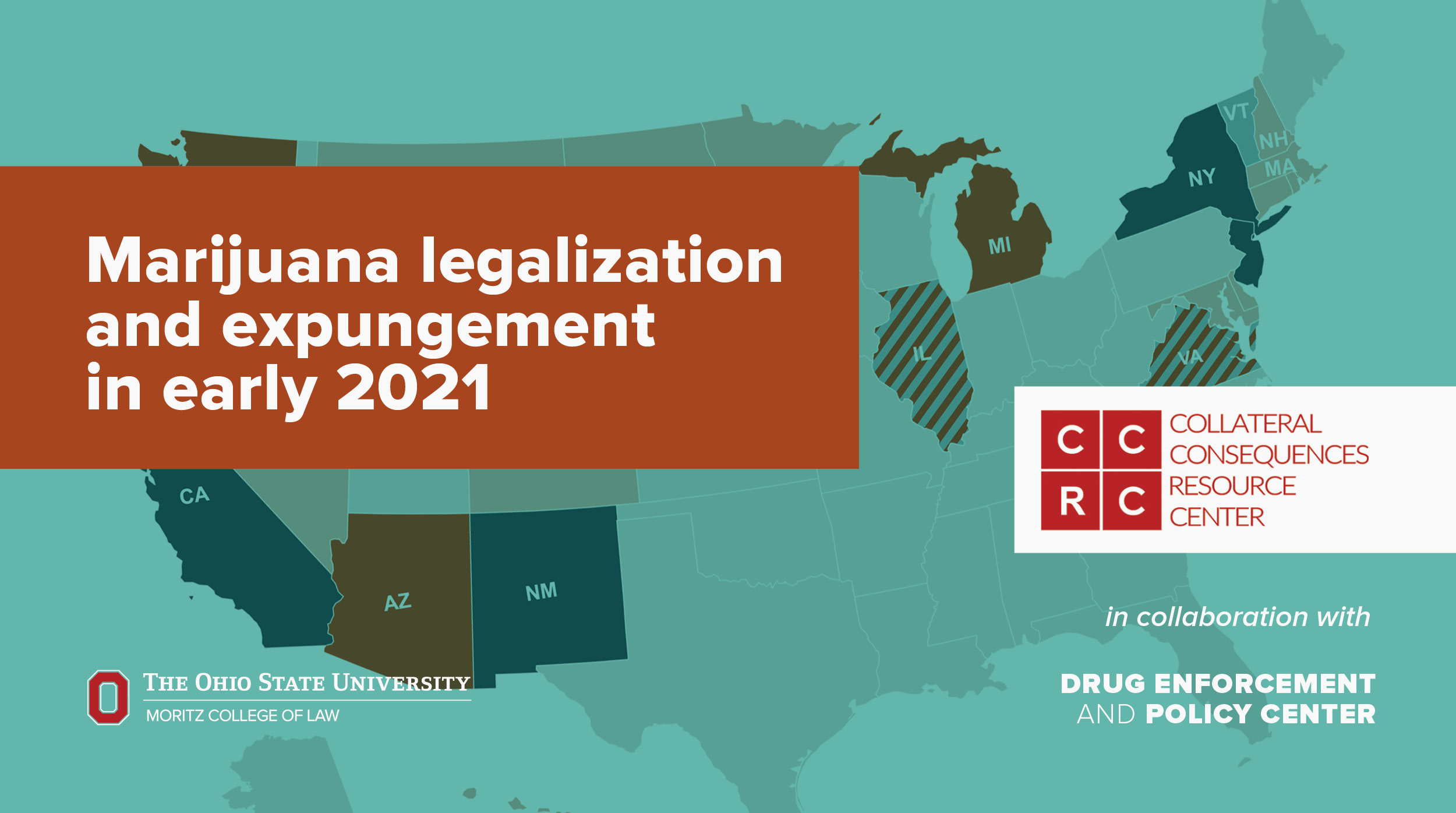
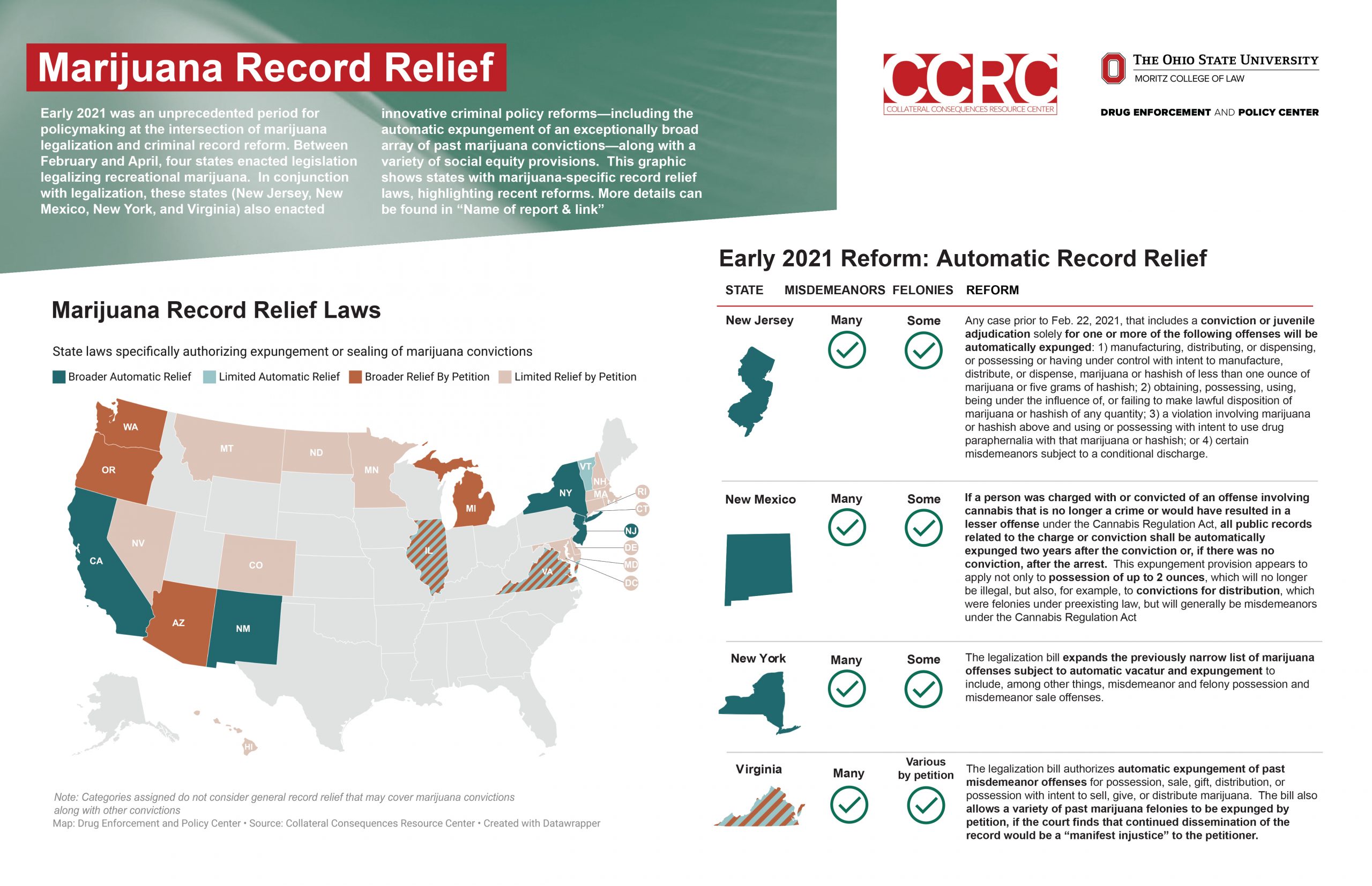
 The Collateral Consequences Resource Center, with support from the Drug Enforcement and Policy Center, produced a report and an accompanying infographic that summarize the groundbreaking criminal reforms enacted this year as part of marijuana legalization and situate them in the national context.
Category: Uncategorized
Pennsylvania expands access to 255 licensed occupations for people with a record
On July 1, Pennsylvania Governor Tom Wolf signed into law an expansive new regulation of the state’s occupational licensing process, giving the agencies that control access to 255 occupations detailed new standards for considering criminal records in the licensing process. Pennsylvania has not addressed these issues on a state-wide basis since the 1970’s, and with proper implementation the new law promises a path to the middle class for skilled individuals whose career prospects might otherwise be limited.
While Pennsylvania’s law is by far the most ambitious one of its kind passed this year, five other states have also passed laws since the beginning of 2020 regulating consideration of criminal record in occupational licensing. Two were states that previously had no general law governing this issue (Idaho and Missouri) and three were states that extended laws passed in recent years (Iowa, Utah and West Virginia).
Pennsylvania’s new law is analyzed in detail below. The provisions of the other five states’ new licensing laws are summarized briefly at the end of the post, and the laws of all six states are written up in greater detail in the relevant state profiles in the Restoration of Rights Project.
Read moreHow to expand expungement: base it in retribution instead of rehabilitation
A thoughtful new article by Brian Murray recommends a new way of conceptualizing expungement that should make it easier for reformers to justify facilitating access to this record relief. In “Retributive Expungement,” forthcoming in the University of Pennsylvania Law Review, Murray argues that expungement should be seen as a way to end warranted punishment rather than to recognize and incentivize rehabilitation. The argument goes that if the legal and social disadvantages of a criminal record function as part and parcel of the criminal sentence imposed by the court, as opposed to a loosely related system of civil penalties that are activated by other laws and other actors, then the court has an obligation at some point to discharge it. While this argument is not new, Murray places it squarely in a modern retributivist framework.
In an earlier era, the drafters of the 1962 Model Penal Code embraced this idea of tying up the loose ends of criminal punishments through court-ordered dispensation, although they chose a more transparent form of remedy in judicial vacatur or set-aside. Before that, this function of ending punishment was performed by executive pardon. In modern times, as ubiquitous background checking has made a criminal record a lasting Mark of Cain, most agree that the record should be made unavailable for private and most public purposes at some point, unless disclosure is ordered by the court for some purpose authorized by law. Facilitating access to this record relief should be easier with the theoretical frame proposed by Murray.
Here is the abstract and a link:
Read moreExpungement relief was introduced in the mid-twentieth century to reward and incentivize rehabilitation for arrestees and ex-offenders and to protect their privacy. Recently, many states have broadened their expungement remedies, and those remedies remain useful given the negative effects of public criminal records on reentry. But recent scholarship has suggested an “uptake gap,” meaning many who are eligible never obtain relief. Despite broadening eligibility, petitioners face substantial obstacles to filing, pre-hearing hurdles, waiting periods, and difficult standards of review without the assistance of counsel. And even when expungement is granted, the recipients are basically left on their own to guarantee the efficacy of the remedy. Some of these attributes of expungement were originally conceived as features, designed to ensure only the most rehabilitated received relief, allowing the state to continue to pursue public safety objectives with public criminal records. But the cold reality of expungement procedure leaves many petitioners facing insurmountable obstacles that amplify the effects of the punishment originally imposed.
In exploring this reality, this Article illustrates that expungement procedure is stuck in a rehabilitative and privacy-centric paradigm. While this framework inspired the creation of expungement remedies and recent reforms, it also has justified onerous procedural obstacles and the placing of the burden of persuasion on the petitioner rather than the state. Outside of automated expungement, which is still relatively rare and restricted to only certain types of petitions, most expungement regimes in substance or through procedure invert what should be the state’s burden to justify retention of criminal records that enable extra punishment by state and private actors. An alternative theoretical basis for expungement is necessary to convince policymakers and decision-makers of the need for broader substantive and procedural reform.
This Article suggests a different paradigm: retributive based expungement. It proposes that incorporating retributive constraints that already underlie the criminal system can benefit petitioners. Plenty of arrestees do not deserve stigma and ex-offenders have done their time, meaning punitive stigma from public criminal records can amount to unwarranted punishment. A retributive-minded expungement procedure would all but guarantee expungement in the case of arrests, where the desert basis is questionable, and would place the burden of proof on the state for convictions once desert has been satisfied. As such, this approach can supplement the case for broader eligibility, automated expungement, and favorable pre-hearing procedures that limit the uptake gap. It also has legal and political viability given that many states already maintain retributivist constraints on sentencing and given that huge swaths of the public perceive desert as a crucial component of any criminal justice issue. In fact, some states are already moving in this direction and can serve as a model for the rest of the country. In short, retributivist constraints can trim procedural overgrowth to supplement substantive reforms that already recognize the disproportionate effects of a public criminal record.
“Executive Clemency in the United States”
This is the title of CCRC Executive Director Margaret Love’s new article for the Oxford Research Encyclopedia. The article describes the historic role played by the executive pardon power in reducing punishments (including collateral ones) and explains clemency’s diminished vitality and reliability in modern times in most states and in the federal system. Love concludes that “[i]t appears unlikely that an unregulated and unrestrained executive power will ever be restored to its former justice-enhancing role, so that those concerned about fairness and proportionality in criminal punishments must engage in the more demanding work of democratic reform.”
Here’s the abstract:
Read morePardons for immigrants: legal, legitimate, and long overdue
In the past year, California Governor Jerry Brown and New York Governor Andrew Cuomo made generous use of their power to pardon state crimes committed by noncitizens, reinvigorating a much-neglected means by which long-term residents may stave off conviction-based deportation. The personal stories of the individuals who benefited from the Brown and Cuomo pardons no doubt illustrate how individuals and families can be spared from unjustified hardship through the power to pardon. But were the governors justified in asserting a role for state interests in tempering federal immigration enforcement policies they evidently regarded as too harsh? In this post, I will briefly explain the legal and theoretical framework that supports a role for state pardons in the immigration context, and then argue for a more generous use of the pardon power in principled and transparent ways.
Read moreRestoration of Firearm Rights After Conviction: A National Survey and Recommendations for Reform (Dec. 2025)

Positive Credentials That Limit Risk: A Report on Certificates of Relief (June 2024)

Advancing Second Chances: Clean Slate and Other Record Reforms in 2023 (Jan. 2024)

Accessing SNAP and TANF Benefits after a Drug Conviction: A Survey of State Laws (Dec. 2023)
The Many Roads from Reentry to Reintegration (March 2022)