A new empirical study provides important evidence that “certificates of recovery/relief” can be effective in facilitating employment opportunities for people with a criminal record. Two University of South Carolina criminologists have concluded that employers in Ohio are willing to look beyond the criminal histories of job applicants who have been issued a Certificate of Qualification for Employment (CQE) from a state court. The study, which involved sending fictitious resumes to over 300 employers in the Columbus area, found that individuals with a felony drug conviction were more than three times as likely to receive a job interview or offer if they had received a CQE.
Although the study’s findings are described as preliminary, they fill an important gap in our knowledge of the effectiveness of Ohio’s CQE, and by inference of similar certificate schemes in other jurisdictions. Such schemes have to date been justified on the basis of assumptions and anecdotal evidence, with little hard data to vouch for their potency. The abstract follows:
Read moreSecuring stable, quality employment is one of the most robust predictors of desistance from offending. Yet, obtaining gainful employment is difficult for ex-offenders due to the stigma of a criminal record. In recognition of employment-related barriers to re-entry, some state legislatures have created certificates of recovery/relief, which lift occupational licensing restrictions, limit employer liability for negligent hiring claims, and aim to ensure employment decisions about certificate-holders are made on a case-by-case basis. The present study presents the results of the first empirical test of the effectiveness of such certificates. Using an experimental correspondence design, fictitious applicants applied to entry-level jobs advertised in the Columbus metropolitan area using fabricated resumes with identical names, educational backgrounds, employment experience, and skills. Because the only differences between the resumes were the type of criminal record and the presence of a Certificate of Qualification for Employment (CQE), the results isolate the specific impacts of criminal records and certificates on employment opportunities. Results indicate that, for job seekers with a one-year-old felony drug conviction, having a certificate of recovery increases the likelihood of receiving an interview invitation or job offer more than threefold. Importantly, certificate-holders and their counterparts with clean criminal backgrounds were equally likely to receive an interview invitation or job offer.
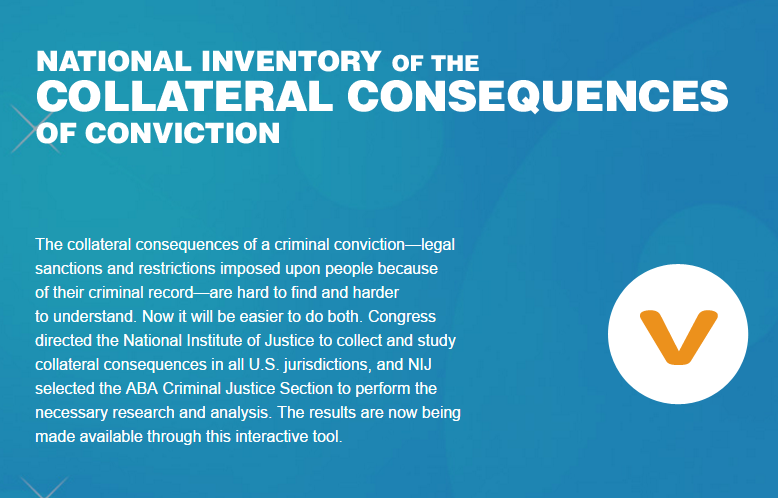 The National Inventory of Collateral Consequences (
 The Department of Education (DOE) is asking colleges and universities to reconsider the use of criminal record inquiries on admissions applications in a new report released on Monday. The