Most Americans can freely visit Canada. However, if you have a criminal history, you may be refused entry. This post describes the circumstances in which a criminal record (including DUIs) will result in your being inadmissible even as a visitor, how long inadmissibility lasts, and what you can do to regain the right to travel freely to Canada. Were you convicted? If you were convicted of a crime in the United States or abroad, this will likely make you “criminally inadmissible.” Even if you were charged with an offence but never convicted, it is a good idea to travel with all…
Read moreCategory: International/comparative
Collateral consequences of conviction in Greece
Collateral Consequences of Conviction in Greece[1] by Dimitra Blitsa 1. Access to Greek Criminal Records In Greece, a criminal record is created for every adult[2] person who has been irrevocably convicted of a misdemeanor or a felony (i.e. by a decision not subject to an appeal before the Supreme Court). Unlike in the U.S. but consistent with continental European countries, a Greek criminal record does not contain arrest information. Individual criminal history records are considered “sensitive personal data.” Disclosure and access is restricted to protect the convicted person’s privacy and to promote rehabilitation. Although Greek court proceedings are open to…
Read moreIndia’s History Sheet
The following post concerns the use of police records in India, which are (like police records in this country) generally not available to the public, yet have important implications for individual privacy. In a later piece the authors will discuss Indian policy and practice on court records, which are publicly available and may be used by employers and others to deny benefits and opportunities. Ed. Comparative analysis is always good for the soul. As we think deeper and more broadly about the types, status and use of criminal records, it is helpful to consider laws and practices in other countries….
Read moreRetention of DNA Profiles and Fingerprints — Europe and the U.S.
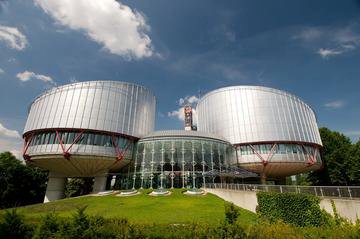
Comparing the European Court of Human Rights’ (ECtHR) 2008 decision in S. and Marper v. the United Kingdom with the U.S. Supreme Court’s 2013 decision in Maryland v. King provides a window on the very different legal status of criminal records in the Europe and U.S. S. and Marper also illuminates the growing chasm between the U.K. and continental Europe when it comes to informational privacy and police records. As illustrated in prior posts, many criminal justice practices that are common in the U.S. are regarded as a serious invasion of privacy in Europe, and therefore a human rights violation. As…
Read moreThe Eternal Criminal Record
The Eternal Criminal Record is the title of Professor James Jacobs’ new book, just out from Harvard University Press. This is the first comprehensive study of criminal records law and policy, and it deals with a range of contemporary legal and policy issues ranging from how records are created and disseminated, to how they are used by public and private actors, to how they are maintained and (perhaps) eventually sealed or destroyed. Professor Jacobs examines important jurisprudential issues such as the right to public access versus the right to privacy; the role of criminal records in punishment theory; how U.S….
Read more