A misdemeanor conviction may be expunged for a “first offender” upon completion of sentence. After a 5-year waiting period, a single felony conviction (defined to include multiple convictions arising from the same operative facts) may be expunged, but 10 listed serious felonies are ineligible. Expungement is also available through the state intervention court system (substance abuse, mental health, veterans). Victims of human trafficking convicted under the Mississippi Human Trafficking Act may petition the court to vacate their convictions. There is no statutory authority to seal or expunge pardoned convictions. Non-conviction records are eligible for immediate expungement upon petition, including uncharged arrests, charges dropped, charges dismissed after deferred adjudication, and acquittals. A person whose conviction was expunged need not report it, but an employer is not prohibited from asking the person about it. Juvenile records are generally confidential; they may be sealed when the person reaches the age of 20 or if the case was dismissed or set-aside. The judge also has authority to order destruction of juvenile records.
Subscribe to Blog via Email
Restoration of Rights Project (RRP)
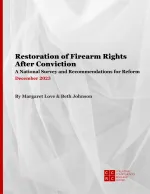
Restoration of Firearm Rights After Conviction: A National Survey and Recommendations for Reform (Dec. 2025)
50-state comparisons
About the Restoration of Rights Project
The Restoration of Rights Project (RRP) is a project of the Collateral Consequences Resource Center in partnership with the National Association of Criminal Defense Lawyers, National Legal Aid & Defender Association, National HIRE Network, Association of Prosecuting Attorneys, and Paper Prisons Initiative. Launched in 2017, the RRP is an online resource containing detailed state-by-state analyses of the law and practice in each U.S. jurisdiction relating to restoration of rights and status following arrest or conviction. Jurisdictional “profiles” cover areas such as loss and restoration of civil rights and firearms rights, judicial and executive mechanisms for avoiding or mitigating collateral consequences, and provisions addressing non-discrimination in employment, licensing, and housing. In addition to the jurisdictional profiles, RRP materials include a set of 50-state comparison charts that make it possible to see national patterns in restoration laws and policies. Short “postcard” summaries of the law in each state serve as a gateway to the more detailed information in the profiles, and provide a snapshot of applicable law in each state.
Originally published in 2006 by CCRC Executive Director Margaret Love, the research in the RRP has been kept up to date and substantially expanded over the years, and it is summarized in an appendix to the treatise on collateral consequences published jointly by NACDL and Thompson Reuters (West). It is intended as a resource for practitioners in all phases of the criminal justice system, for courts, for civil practitioners assisting clients whose court-imposed sentence has exposed them to additional civil penalties, for policymakers and advocates interested in reentry and reintegration of convicted persons, and for the millions of Americans with a criminal record who are seeking to put their past behind them.
These resources may be republished as long as appropriate attribution is given to the RRP as its source.