Tag: Suarez

Putting teeth in Heller’s promise for people with a conviction: Second Amendment litigation round-up

Author, Alan Gura, describes in this post recent efforts to persuade federal courts that people who have lost their firearms rights by virtue of a criminal conviction may be entitled to claim the protections of the Second Amendment.  Alan himself has spearheaded this litigation for the Second Amendment Foundation, following up his Supreme Court victories in D.C. v. Heller and McDonald v. Chicago.   While successes have to date involved civil rights actions in behalf of people with dated non-violent convictions, these precedents may eventually find their way into felon-in-possession and related prosecutions. They also may portend, like the cases invalidating retroactive registration requirements, a greater willingness by courts to limit the scope of categorical collateral consequences that are considered unreasonable and unfair. Ed. *** When Congress enacted the federal Gun Control Act of 1968, with its broad provisions for the disarmament of potentially dangerous people, the Second Amendment laid dormant. Courts paid the Second Amendment cursory attention, considering the provision only when rubber-stamping it with an erroneous, unexamined “collective right” interpretation that rendered the right to arms a nullity. Some of the Gun Control Act’s Congressional sponsors were happy to parrot that view. S. Rep. 89-1866 at 68 (1966) (individual views). But Congress understood that the Act ensnared many people whose disarmament could not be justified as beneficial to society or basically just. As the title of a leading article on the subject asks, “Why Can’t Martha Stewart Have a Gun?” The task of ferreting out the hard luck and irrational cases fell to the Executive Branch, which would evaluate individual applications for relief based on personal circumstances, with unsuccessful applicants having recourse to judicial relief. 18 U.S.C. § 925(c). This process more or less worked, for many years, until anti-gun rights forces in Congress defunded the program in the mid-1990s. With the Government unable to print or process applications for relief, a growing number of people convicted of non-violent, sometimes not terribly egregious crimes found themselves forever prohibited from touching firearms. While some states provided an alternative relief process, many did not, and federal offenders could only pray for a presidential pardon to restore their rights. This injustice is nearing its end. In 2008, the Supreme Court clarified that people have an individual right to keep and bear arms. The rational basis test for gun restrictions went out the window. In came a burden on the Government to actually prove, and not merely assert, that each law restricting access to firearms is consistent with a fundamental constitutional right retained by the people. Categorical prohibitions leveled at people convicted of crimes, including the so-called “felon in possession” ban (though it also reaches many misdemeanants), could be upheld in a general sense. But most courts have now realized, just as Congress did in enacting the federal gun control scheme, that the traditional grounds for denying individuals the means of self-defense—dangerousness, untrustworthiness, a serious risk of unlawful violence—are not going to be satisfied when someone lies about having sold Imclone at 60 on insider information, or is convicted of “felony fishing without a license,” or has pled guilty to any misdemeanor that might be punished by over two years in jail (the alleged standard often employed by courts enforcing the “felon in possession” ban). Most of the early cases arose, as Second Amendment cases often do, in the criminal context. Courts had no trouble telling plainly dangerous criminals charged with being felons in possession that the Framers did not have them in mind when ratifying the Second Amendment, but were usually careful to leave the door open, as Congress did in enacting Section 925(c), for people who once erred but are not a threat today, if they ever were. For these individuals, one leading federal appellate case set the task as follows: To raise a successful as-applied challenge, [an individual] must present facts about himself and his background that distinguish his circumstances from those of persons historically barred from Second Amendment protections. For instance, a felon convicted of a minor, non-violent crime might show that he is no more dangerous than a typical law-abiding citizen. Similarly, a court might find that a felon whose crime of conviction is decades-old poses no continuing threat to society. United States v. Barton, 633 F.3d 168, 174 (3d Cir. 2011). The nation’s leading sponsor of landmark gun rights litigation, the Second Amendment Foundation, has tasked me with making full use of this avenue for relief. We are carefully selecting deserving cases to put some teeth behind Heller’s promise, and demonstrate the absurdity of the Government’s shotgun-approach to firearms disabilities. In light of the Supreme Court’s renewed interest in the constitutional avoidance doctrine, some of our cases also challenge the overly-aggressive statutory interpretation of the federal prohibition with which courts have become unfortunately comfortable. There is, after all, no question that the constitutional questions raised by disarming plainly non-threatening individuals are significant. The early results are promising. We’re two for two in Pennsylvania. Suarez v. Holder, No. 14-968-WWC, 2015 U.S. Dist. LEXIS 19378 (M.D. Pa. Feb. 18, 2015); Binderup v. Holder, No. 13-6750-JKG, 2014 U.S. Dist. LEXIS 135110 (E.D. Pa., Sept. 25, 2014). Julio Suarez, a decorated Army veteran, holder of a security clearance, and elder in his church, faced a lifetime prohibition of Second Amendment rights owing to a quarter-century old Maryland misdemeanor conviction for carrying a handgun without a license. Suarez can’t recidivate—his state doesn’t require a license to carry a handgun, and he’s eligible for a license to carry a handgun concealed. But the government claimed that the bad facts of his 1990 arrest—Suarez had a .12 BAC at the time he was stopped (though not convicted of DUI or any other traffic offense)—meant that he should continue to lose his fundamental rights today. Daniel Binderup’s only offense was a misdemeanor charge for “corruption of minors,” stemming from a long ago consensual affair with an employee just shy of her 18th birthday. Obviously, nobody approves of that conduct—including the state of Pennsylvania, which does not consider him a sex offender and has long ago restored his gun rights (Binderup received a sentence of probation), and Binderup’s wife, who forgave him. The couple has now been married for over 40 years, and has raised two wonderful kids. Like Suarez, Binderup is a stable and productive member of society. The judges in both cases saw nothing that would indicate either gentleman poses any sort of firearms threat beyond that posed by any other law-abiding, responsible citizen. The Government has appealed its loss in Binderup, and we expect it to do the same in Suarez. In both cases, the Government fails to comprehend what an “as applied” challenge means, citing piles of statistics for the proposition that anyone convicted of a crime, without exception, might recidivate. Its briefing extends the argument even to non-violent property offenses. But so what? Binderup and Suarez’s offenses didn’t involve the threat of force. And even if they had, neither of these individuals are likely to recidivate. If generalized recidivism studies can defeat Binderup and Suarez’s cases, then they can defeat all as-applied challenges, effectively overruling Barton and the growing list of appellate precedents confirming real limits on the scope of categorical prohibitions. The weakness of the Government’s claims is underscored by its resort, at least in Binderup’s case, to argument by ad hominem. I won’t repeat here some of the names the Government called my client in the briefing, but the district court was decidedly unimpressed by that approach, and I don’t believe that the court of appeals will like it any better. Moral disapproval is to be expected when one transgresses the law, but it does not suffice to permanently deprive people of their fundamental rights. Of course, the ultimate solution is for Congress to re-fund Section 925(c)’s administrative relief program. Doing so would not entirely eliminate the Second Amendment cause of action, but it would prevent an onslaught of constitutional challenges that the Government cannot possibly defend. The judiciary, and the civil rights bar, will be sure to drive home this point as frequently as necessary in the immediate future. *** About the Author: Alan Gura practices in the areas of civil and appellate litigation, and civil rights law at Gura & Possessky in Alexandria, Virginia. He successfully argued two landmark constitutional cases before the U.S. Supreme Court, D.C. v. Heller and McDonald v. Chicago, and is currently spearheading efforts to persuade federal courts that people with a criminal conviction may be entitled to claim the protections of the Second Amendment. Read more

Another court invalidates federal felon-in-possession statute on Second Amendment grounds
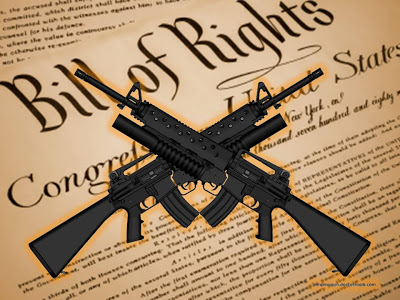
A second federal court in Pennsylvania has held that the federal felon-in possession statute cannot constitutionally be applied to an individual convicted many years ago of a minor non-violent offense. In Suarez v. Holder, the district court for the Middle District of Pennsylvania held that a man convicted in 1990 of misdemeanor possession of an unregistered handgun and sentenced to probation was “no more dangerous than a typical law-abiding citizen,” and therefore entitled to claim the protection of the Second Amendment.  The Suarez court followed the reasoning of the court in Binderup v. Holder, decided in Pennsylvania’s Eastern District in September.  The government has appealed the Binderup decision, and the government’s brief is due this month. As in Binderup, the court evaluated the constitutionality of 18 U.S.C. § 922(g)(1) under a strict scrutiny standard, and found that it could not constitutionally be applied to someone whose “conviction is decades-old” and who “poses no continuing threat to society.”  In reaching its conclusion that Julio Suarez could not be barred from possessing firearms, the court described his background and circumstances as follows: (1) he has been married for twenty years and is successfully raising three children; (2) he is an elder in his church; (3) he has had no history of violence; (4) a firearm disability imposed under Pennsylvania law was removed by a Pennsylvania Court of Common Pleas; and (5) he maintains “Secret” security clearance in connection with his employment for a government contractor. The court made no attempt to set forth standards for evaluating whether someone is “no more dangerous than a typical law-abiding citizen” beyond the “know it when I see it” picture of a solid citizen it found in Mr. Suarez.   The government may be expected to point this out in its brief to the Third Circuit. The Suarez court suggested that it may be harder for a criminal defendant to claim Second Amendment protection than it is for a law-abiding individual suing civilly.  Addressing the government’s argument that Suarez’s situation was similar to that of the losing challenger in the leading Third Circuit case, U.S. v. Barton, the court pointed out that Barton presented no facts showing that his circumstances placed him outside the scope of the felon-in-possession statute, “[n]or was he capable of doing so, since he had just been indicted for selling firearms with obliterated serial numbers.” On the way to its constitutional holding, the court denied Mr. Suarez’s argument that because he was convicted of a misdemeanor rather than a felony he was not barred from gun possession by § 922(g)(1).  But the definition of a triggering offense in 18 U.S.C. § 921(a)(20) includes any misdemeanor that is “punishable by” a prison sentence exceeding two years, a standard plainly satisfied by the Maryland law under which Mr. Suarez was convicted. As soon as the government files its appeals brief in Binderup we will post it here with comments.  Perhaps by then we will have persuaded Alan Gura, who represents both Mr. Binderup and Mr. Suarez, to take time out from his busy litigation schedule to bring us up to date on the national picture of constitutional challenges to a collateral consequence that is more important than any other to many Americans. Read more