The 2018-2019 edition of the West/NACDL treatise on collateral consequences is now available for purchase, at a publisher’s promotional discount. Wayne A. Logan has joined Margaret Love and Jenny Roberts as a co-author of this comprehensive resource: Collateral Consequences of Criminal Conviction: Law, Policy & Practice.
This third edition of the treatise has been entirely updated, and includes new material on regulation of criminal background checking; consideration of collateral consequences in the criminal case; laws providing for restoration of rights and status, including in employment and occupational licensing; and, recent court decisions on sex offender registration and related penalties. Appendices include detailed state-by-state analysis of restoration laws, and other primary source materials. The full table of contents for this 1048-page book is available here.
The publisher describes the book as follows: 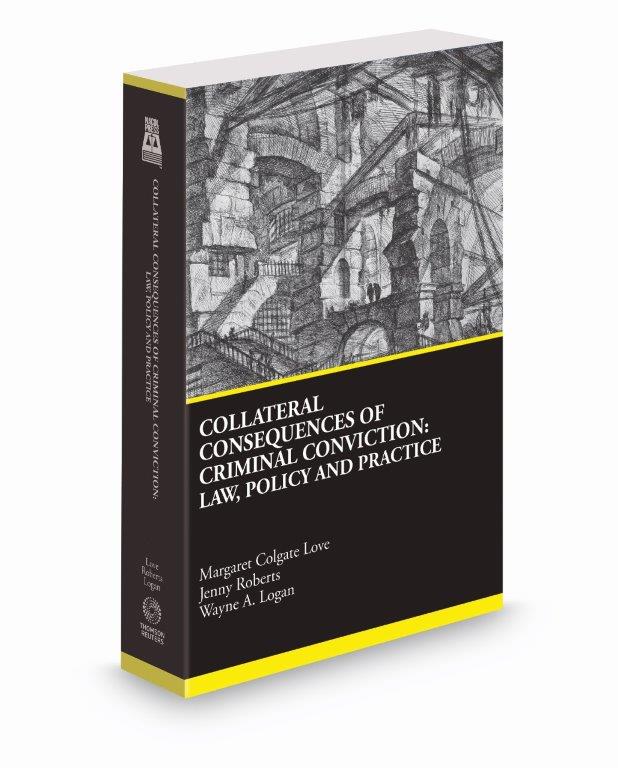
Today, many millions of Americans have a criminal record of some kind, potentially triggering a vast array of highly burdensome and stigmatizing consequences that can have life-long debilitating effects. This volume provides comprehensive discussion and analysis of these after-effects of the nation’s ongoing “tough on crime” policies, ranging from loss of civil rights and employment opportunities, to registration and residency restrictions. It serves as a single go-to resource for practicing lawyers, judges, and policymakers as they negotiate the often-complex and sometimes-obscure statutes and regulations that come into play as a result of arrest and conviction.
Highlighted features:
- Describes specific types of consequences, including firearms dispossession, licensing and contracting bars, travel restrictions, immigration consequences, and sex offender registration
- Addresses legal and ethical duties of counsel and courts
- Analyzes constitutional law aspects of collateral consequences
- Explains varied methods of rights restoration and preservation in different U.S. jurisdictions
- Covers criminal practice-related issues (charging, negotiating pleas, sentencing, appeals and collateral relief)
- Addresses access to criminal records and regulation of criminal background checking
- Discusses current and possible future law reform efforts (ALI/MPC, state initiatives, etc.)
Appendices contain summaries of state and federal laws on restoration of and status, and key documents on law reform proposals.
The book is available for purchase, currently at a discounted price of $186.30 for paperback or e-book (though the discounted rate may not be shown on the West catalogue page). For the discounted rate, please call the publisher at 800-328-9352, and press “2” to place an order.
The book is also available on-line on Westlaw. Endorsements from Bryan Stevenson, Jeremy Travis, Judge John Gleeson, and Jo-Ann Wallace can be seen here.

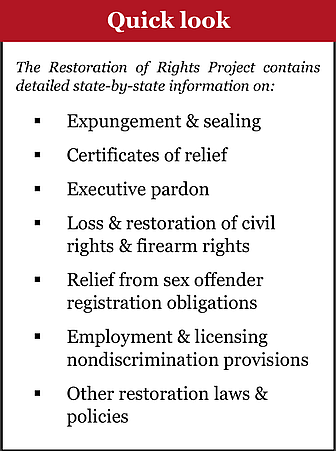 offers state-by-state analyses of the law and practice in each U.S. jurisdiction relating to restoration of rights and status following arrest or conviction. Jurisdictional “profiles” cover areas such as loss and restoration of civil rights and firearms rights, judicial and executive mechanisms for avoiding or mitigating collateral consequences, and provisions addressing non-discrimination in employment and licensing. Each jurisdiction’s information is separately summarized for quick reference.