Category: Immigration

Criminal records and immigration in Europe and the U.S.

What are the emerging trends in Europe and the United States in considering a person’s past criminal record for purposes of travel, work and residency?  Professor James Jacobs of NYU Law School and three co-authors have just posted on SSRN a fascinating article titled Criminal Records and Immigration:  Comparing the United States and the European Union.   Research for the article, which will be published in the Fordham International Law Journal, shows that EU countries tend to focus primarily on public safety concerns in deciding the relevance of a criminal record for immigration purposes, including travel to and within the EU.  In contrast, the United States treats criminal record as “an indelible mark of bad character” that has become “the most important determinant of who is admitted to the country, who is removed, and who is offered the privileges of citizenship.”

While many U.S. practitioners and scholars are familiar with the ways a criminal record can affect a non-citizen’s right to enter and remain in this country, they will be interested to learn more about the complex and nuanced way that a criminal record can affect immigration to as well as travel and work within the European Union and its constituent countries. The authors ask the question whether increasing efficiency in access to criminal records in the EU will bring its laws and policies closer to those of the U.S.
Read more

Canadian travel restrictions based on criminal record

Most Americans can freely visit Canada. However, if you have a criminal history, you may be refused entry.  This post describes the circumstances in which a criminal record (including DUIs) will result in your being inadmissible even as a visitor, how long inadmissibility lasts, and what you can do to regain the right to travel freely to Canada.

Were you convicted?

If you were convicted of a crime in the United States or abroad, this will likely make you “criminally inadmissible.”  Even if you were charged with an offence but never convicted, it is a good idea to travel with all your court documents demonstrating that there is no conviction on your record. Carrying all these documents, though not required, is highly recommended to avoid any confusion or refusals at the border as the onus is on the applicant to demonstrate that they are not inadmissible.

Border officers have the option to deny admission on grounds that it is reasonable to believe a person committed an act that would be an offence in Canada, so that pending charges may be grounds for a finding of inadmissibility.  A guilty plea followed by dismissal of charges pursuant to a deferred adjudication scheme may also be considered proof of commission of an act.

Read more

International travel restrictions based on criminal record

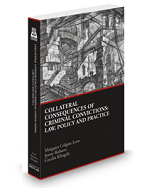
Collat_ConsequencesBelow is another excerpt from the second edition of Love, Roberts & Klingele, Collateral Consequences of Criminal Conviction: Law, Policy & Practice (West/NACDL, 2d ed. 2015)(forthcoming), this one about restrictions on international travel based on criminal record.  The first section discusses the subject in general terms, while the second section describes restrictions on travel to Canada for individuals with a foreign conviction, and the methods of overcoming these restrictions.  (An earlier post described methods of neutralizing Canadian convictions for purposes of travel to the U.S.)

Read more

Criminal records and the Obama immigration initiative

The National Immigration Project of the National Lawyers Guild and the Immigrant Legal Resource Center have published a practice advisory for criminal defense lawyers representing non-citizens seeking relief under the Deferred Action for Parental Accountability (DAPA) program announced by President Obama on November 20, 2014. DHS simultaneously announced new priorities for enforcement that will bar eligibility for the new program, many of which are based on criminal conduct or convictions. The nine-page practice advisory provides technical assistance to criminal defense practitioners seeking to navigate the eligibility shoals of the new program for clients facing criminal charges.

Read more

“Arrests as Regulation”

Eisha Jain, a fellow at Georgetown Law Center, has posted on SSRN an important and (to us) alarming article about the extent to which mere arrests are beginning to play the same kind of screening role outside the criminal justice system as convictions. In “Arrests as Regulation,” to be published in the Stanford Law Review in the spring, Jain argues that arrests are increasingly being used systematically as a sorting and screening tool by noncriminal actors (including immigration authorities, landlords, employers, schools and child welfare agencies), not because they are the best tool but because they are easy and inexpensive to access.

Read more