Category: Commentary

The “president’s idle executive power” and collateral consequences

In their Washington Post op ed on the President’s neglect of his pardon power posted earlier on this site, Rachel Barkow and Mark Osler are critical of the Justice Department’s bureaucratic process for processing applications for executive clemency, which they argue takes a very long time and yields very little.  (The New York Times editorialized last year in a similar vein about how DOJ has effectively sidelined the president’s power as a tool for justice for more than 20 years.)  Barkow and Osler ask why Justice considered it necessary or wise to farm out the processing of thousands of petitions from federal prisoners to a private consortium called Clemency Project 2014, rather than reform the official process:  “such a short-term program does nothing to fix the problematic regular clemency process that will survive this administration unless action is taken.” Barkow and Osler focus on sentence commutations, and not on the other common type of clemency grant: a full pardon, typically sought by those who have fully served their court-imposed sentences, to avoid or mitigate collateral consequences.  In addition to the thousands of prisoner petitions awaiting consideration by DOJ’s Pardon Attorney, there are now more than 800 petitions for full pardon pending in the Justice […]

Read more

New report describes public health consequences of incarceration

A new report from the Vera Institute, On Life Support: Public Health in the Age of Mass Incarceration, highlights the “contagious” health effects of incarceration on the already unstable communities to which most of the 700,000 inmates released from prison each year will return.  The report argues that high rates of incarceration among residents in these communities are “one of the major contributors to poor health in communities,” and that this has “further contributed to diminished educational opportunities, fractured family structures, stagnated economic mobility, limited housing options, and restricted access to essential social entitlements.”  In “a political landscape ripe for reform” of these cascading collateral consequences of conviction, the report finds significant promise in the Affordable Care Act: The passage of the ACA in 2010 was a watershed moment in U.S. history. State and local governments are increasingly realizing the opportunities created by the ACA to develop partnerships between health and justice systems that simultaneously abate health disparities and enhance public safety. A number of the legislation’s key provisions—the expansion of Medicaid, increased coverage and parity for mental health and substance use services, and incentives for creating innovative service delivery models for populations with complex health needs—provide new funding streams and […]

Read more

“The president’s idle executive power: pardoning”

As the presidential pardon of everyone’s favorite Thanksgiving galliformes makes front-page news across the country (a tradition that the many human clemency petitioners who have spent years awaiting action must struggle to find the whimsy in), two law professors take the federal clemency system to task in a new Washington Post opinion piece.  In the piece, professors Rachel E. Barkow (NYU) and Mark Osler (University of St. Thomas) argue that the long and multi-tiered review process for federal clemency petitions could be significantly improved if the president would minimize the Justice Department’s involvement in the process while shifting responsibility to a bi-partisan review commission.  From the article:

Read more

Labels and stereotypes in the President’s immigration speech

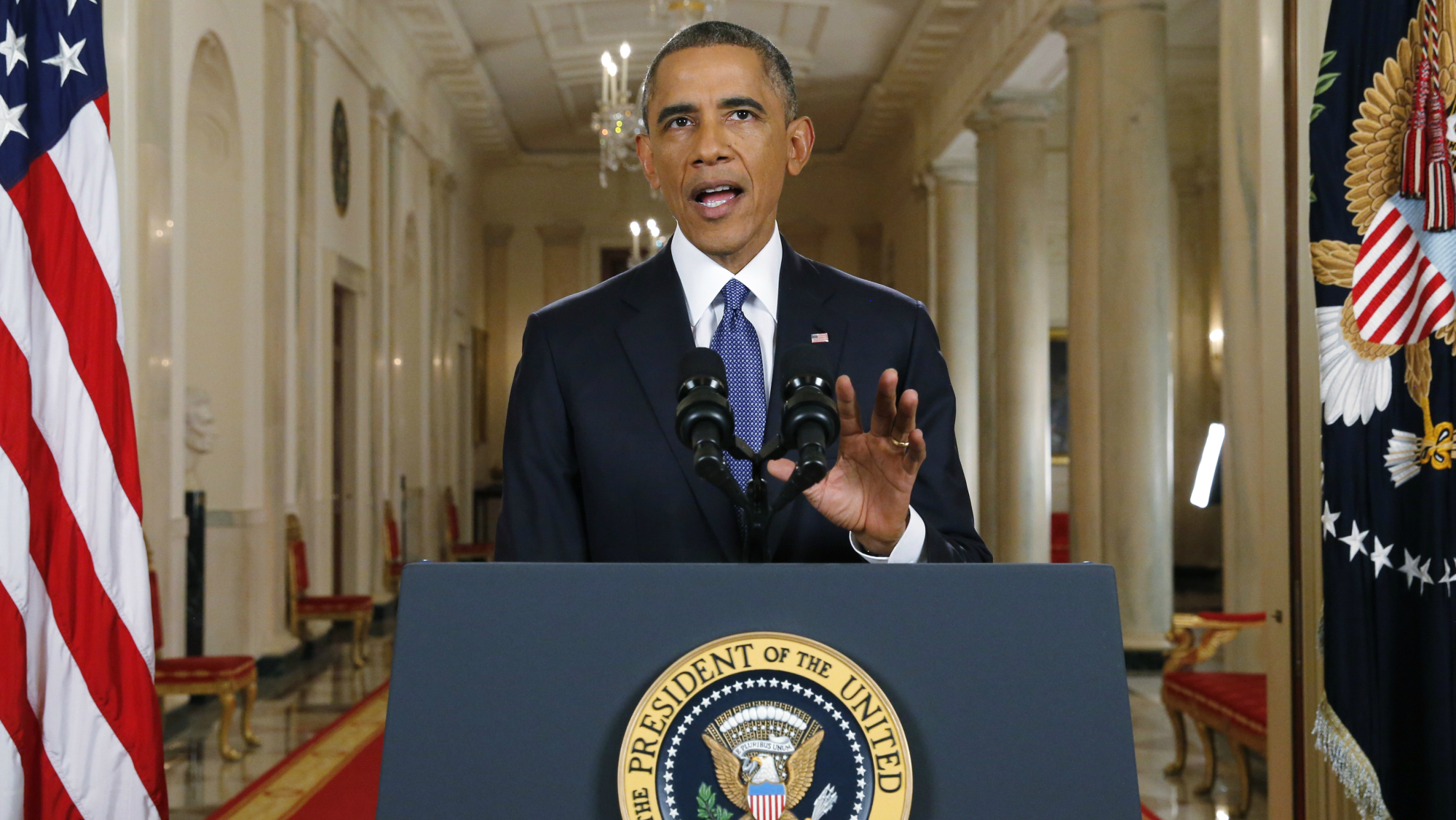
The President’s decision to take unilateral executive action to insulate certain undocumented immigrants from the immediate threat of deportation has provoked outrage in some quarters and profound relief in others.   The legal issues raised by this decision are important and debatable, some of its line-drawing is problematic, and its success stands or falls on the uncertain terrain of bureaucratic discretion.  No doubt its political implications are yet to be revealed. But amid all the uncertainty, one thing is clear.  In his speech announcing the initiative the President said, repeatedly and definitively, that no one with a criminal record would benefit from his reprieve.   Thus, he emphasized that enforcement resources would remain focused on “actual threats to our security,” by which he meant “Felons, not families. Criminals, not children.”   Again, it is possible to benefit from the law if you can “pass a criminal background check” (whatever that means), but “[i]f you’re a criminal, you’ll be deported.”   Even people convicted of misdemeanors will not be spared under the new DHS enforcement priorities. Entirely apart from the wisdom or fairness of the immigration policy choice involved in this broad blanket exclusion (and there are good reasons to be critical of it), […]

Read more

Playing nice in criminal court: “Crashing the Misdemeanor System”

As the Supreme Court recently acknowledged in Lafler v. Cooper (2012), American criminal justice “is for the most part a system of pleas, not a system of trials.”  Nowhere is that statement truer than in the lower courts, where millions of misdemeanor arrests are resolved, or, to use the lingo of the criminal court, “disposed of,” without even a whiff of a trial. In a provocative New York Times Op-Ed, “Go to Trial: Crash the Justice System,” Michelle Alexander raised the prospect of organizing people to refuse to plea bargain.  Professor Jenny Roberts takes a cue from Alexander and manages to be even more rebellious.  In Crashing the Misdemeanor System, 70 Wash. & Lee L. Rev. 1089 (2013), she urges much more specifically that defense attorneys focus their energy on taking down extant misdemeanor systems that are best characterized as guilty plea mills. Roberts argues that “the most minor misdemeanor conviction has serious implications for so many people,” and bemoans the fact that nevertheless most misdemeanors are given short shrift by all institutional players — judges, prosecutors and defense attorneys alike.  Her article is a clarion call for defense attorneys to reimagine, refocus and reinvigorate their misdemeanor practice, especially in […]

Read more