Tag: Pittsburgh

CCRC welcomes Sala Udin to board of directors

The Collateral Consequences Resource Center is pleased and honored to welcome civil rights activist, community organizer, politician, and accomplished actor Sala Udin to its Board of Directors. Udin is personally familiar with the obstacles faced by those with criminal records, having had to overcome them in becoming a respected community leader and champion for justice. Udin’s life of public service began months after he graduated from high school in 1961, when he left Pittsburgh to join the Freedom Riders working to integrate the segregated South.  Udin – whose legal name remains Samuel Wesley Howze – spent four years working primarily in Mississippi organizing rural African Americans, registering voters, and leading education initiatives.   When he returned to Pittsburgh, Udin founded and ran a community drug treatment center and co-founded the Centre Avenue Poets’ Theater Workshop, an African American community theater, with friends and celebrated playwrights August Wilson and Rob Penny.  He played the lead in the original production of Wilson’s seminal play Jitney.  Udin’s path hit a couple of speed bumps between 1968 and 1970 when he found himself on the wrong end of the justice system on several different occasions.  Twice it was minor nuisance offenses in his hometown, but a third time resulted in a five-year federal prison term after he was arrested in Kentucky on his way home from Mississippi with a firearm in the trunk of his car.  Charged with transporting an illegal firearm across state lines, he later told CBS Pittsburgh that “I decided that I’d rather be caught with a gun by the police than without it by the Klan if I had to defend my life on some dark, lonely road in Mississippi.”  Former Pennsylvania Governor Ed Rendell pardoned his two state convictions in 2007, and his application for a presidential pardon of his federal conviction is currently pending. Udin’s time in prison did nothing to lessen his commitment to service and justice, however. After his release on parole after seven months, he relocated to the California Bay Area where he worked for the next 20 years with social services organizations primarily on substance abuse and AIDS advocacy issues.  He served as Executive Director of House of the Crossroads, a drug treatment center, and established the Multicultural Training Resource Center before returning to Pittsburgh in 1992. In 1995 Udin was elected to the Pittsburgh City Council, representing the Sixth District, which includes the Hill District, his childhood home. He served on the Council for eleven years, overseeing the largest residential construction project in Pittsburgh’s history, working to create housing and employment opportunities for women and minorities, and establishing Freedom Corner, a staging ground for community protests and a monument to civil and human rights advocates. While in office, Udin served as the director of the Hill Community Development Corporation, which works to strengthen and preserve Pittsburgh’s historic Hill District, and was a founding member of the August Wilson Center for African American Culture.  After leaving office, Udin served as President and CEO of the Coro Center for Civic Leadership, a non-profit corporation that trains thousands of ethical and diverse civic leaders across the country until 2015.   Udin continues his service as a social justice advocate, community leader, and champion of the arts through his work with the University of Pittsburgh Center of Race and Social Problems, the Hill Community Development Corporation, and the August Wilson Center for African American Culture.   We look forward to the wealth of experience and passion that Sala Udin will bring to the CCRC as a member of the Board, and are excited that he has agreed to lend his energy to and reputation to promoting a fuller understanding of collateral consequences and second chance issues across the country.   Read more

“Poised to commute dozens of sentences, Obama remains the ‘Scrooge’ of pardons”
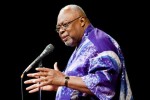
Yahoo News has published a piece by its chief investigative reporter Michael Isikoff commenting on how few pardons President Obama has granted, and how backed up the Justice Department’s pardon office seems to be.  He illustrates the problem of presidential inaction with the case of Sala Udin, a Pittsburgh community activist and former City Council member, whose application for pardon of a 1970 firearms conviction has been awaiting decision for several years. Isikoff reports that while the President is likely to issue a number of sentence commutations this week, no pardons will be forthcoming. This leaves the 800 people whose pardon applications are pending in the Justice Department wondering whether there is hope for forgiveness during this president’s term. What does it take to get a pardon from President Obama? It’s a question Sala Udin, a former Pittsburgh City Council member and onetime civil rights Freedom Rider, is asking a lot this summer, more than three years after he first asked a president he deeply admires to grant him a pardon for a 44-year-old federal firearms conviction. “It’s downright depressing,” says Udin, 72. “I don’t know whether [my application] has gotten lost in the back of the file, but I haven’t heard anything. It’s very frustrating.” The White House is planning to announce this week that Obama has commuted the sentences of more than 40 nonviolent offenders, a move that officials say illustrates his commitment to criminal justice reform. But this week’s announcement, sources tell Yahoo News, is unlikely to include any actual pardons of petitioners like Udin, one of the more than 800 people whose applications for presidential mercy are stacked up at the Justice Department’s Office of the Pardon Attorney. That would extend a record of parsimony on pardons that critics say is one of the paradoxes of Obama’s presidency: Obama, who has spoken with eloquence about grace and redemption, has granted fewer pardons (43) than any president since James Garfield (who died from an assassin’s bullet in 1881 barely six months after he had been sworn in). “He’s been unusually stingy — he’s a clemency Grinch,” says Douglas Berman, an Ohio State law professor who has studied presidential pardons. Obama’s reluctance to use his constitutional power to pardon to some extent reflects his determination to avoid controversies, such as the uproar that followed Bill Clinton’s pardon of fugitive financier Marc Rich on his last day in office, critics and current and former officials say. Even the relatively few pardons Obama has granted — such as one for an aging bootlegger and another for a man convicted of mutilating coins in the early 1960s — have been largely trivial, and missed opportunities to correct past injustices or excesses in the criminal justice system, his critics say. “It’s just not something that he’s interested in,” says P.S. Ruckman Jr., a political science professor who writes a blog, Pardon Power, and ranks Obama as “the seventh least merciful” president in history. Obama, for his part, has blamed the Office of Pardon Attorney, whose chief, Ronald Rodgers, resigned last year amid disclosures that he had misrepresented a commutation applicant’s record to the White House. (The relatively small office — with about seven lawyers — that reviews all pardon and commutation applications is now headed by a former journalist, Deborah Leff.) “I noticed that what I was getting [from the Pardon Office] was mostly small-time crimes from very long ago,” Obama said in an interview with the Huffington Post last March, in which he vowed to move “more aggressively” on petitions during his remaining time in office. Sources have also told Yahoo News’ Liz Goodwin that the president complained that the pardon attorney’s office was sending him petitions from wealthy and connected applicants, who typically wanted a pardon so that they could get a hunting license. Whatever the reasons for past inaction, it has been little comfort so far to Udin, whose lawyer, Margaret Love (the former chief of the Justice Department’s pardon office), calls him a “poster child” for a pardon. In his youth, Udin (who changed his name from Samuel Howze) was a Freedom Rider for the Student Nonviolent Coordinating Committee who braved racist cops while registering black voters in the Mississippi Delta. “I was beaten up pretty bad and thought I was going to die,” said Udin, recalling an incident in which he was pulled over and ordered to “get out of the car, n—–!” In 1970, while driving back from Mississippi, Udin was stopped for speeding outside Louisville and an unloaded rifle was found in the trunk of his car, resulting in his conviction for interstate commerce of firearms and his incarceration for eight months in federal prison. Udin doesn’t dispute his guilt, but he offered an explanation in his application to the Justice Department: “At that point, although I was previously committed to nonviolence, I concluded that if I was trapped on some lonely, dark road in the South and confronted by Klansmen who threatened to kill me, I would be prepared to defend my life,” he wrote in his petition. “I concluded that I would rather be caught by the police with defensive weapons than to be caught by the Klan without them.” Udin had had a few other earlier minor brushes with the law — including state convictions for having an unregistered handgun in his car in Pittsburgh and receiving stolen property, both of which were wiped clean by a pardon from then Pennsylvania Gov. Ed Rendell in 2007. But following his convictions more than four decades ago, Udin made what Pennsyvlania Sen. Bob Casey called (in a letter to Obama last year endorsing his petition) “extraordinary contributions to the community.” He founded an African-American Culture Center in Pittsburgh, headed up a national leadership institute, and served three terms on the Pittsburgh City Council (from 1995 to 2006), spearheading the creation of the city’s police civilian review board. Udin acknowledges one possible obstacle in his petition: In 2007, he campaigned for Obama and made a $500 contribution to his campaign. Could the White House be reluctant to endorse Udin’s pardon petition for fear it would look like a political favor for a past supporter? “I don’t want to say or do anything that would cause a problem for President Obama,” Udin said. “I love him. If that’s the reason, I’ll accept it. I just don’t want it to be for any other reason.” The White House wouldn’t comment on Udin’s (or any other) case, nor would the Justice Department say whether his application has even made it to the president’s desk. But a White House spokeswoman, when asked about the president’s record on pardons generally, said, “The president’s term isn’t over yet,” adding in an email: “The president believes strongly that the ability to petition for clemency is a critical component of our criminal justice system. He looks forward to reviewing additional requests for clemency in the coming months.” Read more