Tag: background check

The pros and cons of fingerprinting Uber drivers

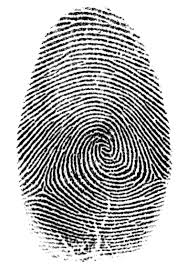
The following piece by Maurice Emsellem of the National Employment Law Project was originally published on the Huffington Post.   Uber’s ruthless expansion strategy has put state and local legislators in the middle of the debate over regulation of the on-demand, ride-hailing workforce. Laws requiring background checks for drivers, which can restrict access to Uber’s core asset, are now a central theme of the regulatory battle, focusing specifically on the use of state and federal criminal history databases that require fingerprinting of ride-hailing drivers. Indeed, Uber and Lyft recently chose to abandon the Austin, Texas market rather than comply with local laws requiring taxi drivers to undergo fingerprint-based background checks (56 percent of Austin voters rejected an initiative to exempt on-demand companies from the city’s law). And in New Jersey and Chicago, where similar measures are now being actively debated, Uber retained former U.S. Attorney General Eric Holder to lobby against the bills by challenging the accuracy and fairness of fingerprint-based FBI background checks (which is an issue that NELP has championed as an advocate of bi-partisan federal reform legislation). To help inform the debate, it’s important to first clarify that “fingerprinting” is a shorthand term referring to background checks that require an individual’s fingerprint (usually captured by means of “livescan” technology) to access either a state criminal history repository or the FBI database, which collects data from the state and local systems. In contrast to name-based checks conducted by commercial background check companies, fingerprint-based checks are less vulnerable to misidentification. In addition, private employers typically cannot access the databases requiring fingerprinting of the workers unless authorized by a federal, state, or local occupational licensing law, like the ride-hailing laws regulating taxi drivers. Instead, with varying degrees of accuracy, the commercial background check companies collect criminal history data from the local courts, the states, and “aggregators” of criminal history data. The arguments for and against fingerprinting break down roughly as follows. State and local lawmakers advocating for fingerprint background checks of on-demand drivers are concerned for the safety and security of consumers, which they argue is better protected by accessing the national FBI database, while also pointing out that on-demand drivers should be subject to the same background check regime as all other ride-hailing drivers. Uber, in contrast, has argued that the FBI database, in particular, contains incomplete information (mostly state arrests that have not be updated to reflect the disposition of the case), which discriminates against people of color who are more often arrested for crimes that never lead to a conviction. As an advocate for the employment rights of people with records and on-demand workers, NELP has concerns with both approaches. Most importantly, while we strongly agree that the FBI database has serious limitations, Uber’s position advocating for the rights of workers with records rings hollow unless it can demonstrate, with hard data (e.g., internal audits), that its commercial background checks are more accurate than the FBI’s records. Equally important, as argued in a recent NELP paper, Uber and most other on-demand employers should be fully complying with the civil rights and consumer laws that protect workers navigating employment background checks. That means recognizing that the drivers, indeed, have rights under Title VII of the Civil Rights Act of 1964 and the Fair Credit Reporting Act, which can be enforced independently by the federal enforcement agencies and the courts. Our concern with the position of lawmakers — that FBI records are the “gold standard” of background checks and should be applied to more ride-hailing drivers — is that it fails to adequately appreciate the limitations of the FBI records. We appreciate the need to ensure a level playing field of background checks for all taxi drivers, but policymakers have to take seriously the damage done by FBI background checks in the name of consumer safety. To help rectify the situation, both sides should be actively supporting bi-partisan legislation now pending in Congress to clean up the FBI background checks for employment.  In addition, the states and localities considering legislation to extend FBI background checks to on-demand drivers should follow California’s lead and track down the missing dispositions before the records are released to the occupational licensing authorities. Finally, to adequately protect all workers seeking to become taxi drivers, both sides should embrace the occupational licensing reform recommendations set forth in NELP’s recent report, Unlicensed and Untapped: Removing Barriers to State Occupational Licenses for People with Records, which will help prevent discrimination against people of color and promote the integrity of the background checks process. Read more

“Preventing Background Screeners from Reporting Expunged Criminal Cases”

In an article published this week by the Shriver Center, Preventing Background Screeners from Reporting Expunged Criminal Cases, Sharon Dietrich offers helpful advice for advocates on to how to combat the problem posed by the reporting of expunged and sealed criminal records by private commercial background screening services. Her advice is based partly on her own organization’s participation in litigation under the federal Fair Credit Reporting Act (“FCRA”) against one of the country’s larger background screeners — an experience that she recounts in detail. Dietrich identifies the problem of improper private reporting of expunged records as one that “threatens to undermine the whole strategy of broadening expungement as a remedy for the harm of collateral consequences.” She describes the underlying issue as follows:  [T]he commercial background-screening industry, which runs the lion’s share of the background checks obtained by employers and landlords, sometimes reports those expunged cases long after they have been removed from the public record. Companies in the background-screening industry typically maintain their own privately held databases of criminal cases from which they generate background checks. When updating their data from public sources (often state courts), these screeners often do not use methods to determine whether cases that were reported by their sources have been removed (i.e., expunged or sealed), and they continue to report them. Dietrich encourages advocates and their clients to be proactive about keeping their expunged records out of public hands by obtaining copies of their files from the larger background screeners (they are required to share them by law) and by reporting expungements directly to screeners. She also encourages advocates to pressure entities that sell criminal records, like the courts, to regularly provide buyers with expungment data and to require buyers to regularly remove expunged records from their databases. If expunged records are still being reported or have already been reported, Dietrich encourages considering litigation under the Fair Credit Reporting Act, which requires background screeners to follow “reasonable procedures” to ensure the accuracy of the records they report (“strict procedures” in the employment context). For a client who has sustained lost wages or other damages because of the reporting of an expunged or sealed case, litigation under the Fair Credit Reporting Act should bring relief. Individual cases are not overly complicated and have some deterrent effect if the client recovers a monetary award. Dietrich’s recounting of the litigation in Giddiens v. LexisNexis — in which her own organization, Community Legal Services of Philadelphia, brought a class action suit against LexisNexis under FCRA after it was discovered that one of CLS’s expungement clients had been denied employment based on a record that was expunged nearly 2 years earlier — offers a practical perspective on the choices, challenges, and outcomes that may be expected in large-scale FCRA litigation, as well as a look at how criminal data is obtained and shared by commercial providers. The case eventually settled and LexisNexis agreed to change its practices and to make cash payments to 300 identified class members. Dietrich’s reflection of the pros and cons of the litigation strategy and its outcome are particularly insightful. Sharon Dietrich’s full article is available at this link.  Registration with the Shriver Center website is required to view the article, but it is fast and free. NOTE: Last month, Community Legal Services filed a similar class action FCRA lawsuit in the Eastern District of Pennsylvania against commercial screener Realpage, Inc., alleging improper reporting of expunged convictions to landlords.  The complaint in that case can be viewed here. Read more

Federal regulation of criminal background checking

Twenty years ago, criminal record background checks for employment were rare. Today, the easy accessibility of criminal records on the Internet, and the post-September 11th culture of heightened scrutiny, have contributed to a sharp increase in background checks of job candidates.  If you’re applying for jobs in most industries, expect employers to ask about a criminal record at some point in the hiring process—and expect many of them to run a background check on you. It’s a harsh reality for an estimated one in four U.S. adults who have some type of criminal record.  Unfortunately, any involvement with the criminal justice system—even having minor or old offenses—could become a job obstacle for these 70 million Americans. Even if you’ve avoided a run-in with the law, you could still find yourself being unfairly screened out for a job due to an erroneous background check report. With thousands of private background check companies across the country that have varying levels of reliable information, inaccuracies in these reports are far too common. Unknown to many job candidates, private background check companies and the employers relying on their reports are regulated by a federal consumer protection law called the Fair Credit Reporting Act (FCRA).  Although more well-known in the credit report context, FCRA also applies to companies that produce criminal background check information, and gives job-seekers a number of protections. Here are a few highlights of FCRA as applied to criminal record information reports: Background check companies may not report arrests older than seven years and must have procedures to ensure accuracy of the information provided to employers. Employers must obtain authorization from the job applicant before getting the report. Before the background check report can be used to deny a job, the employer must provide a copy of the report to the job-seeker. The job applicant also has the right to dispute the accuracy of the report. Despite the letter of the law, advocates representing workers have identified background check reports that are riddled with errors. The consequences are devastating for workers unfairly denied job opportunities because of an inaccurate record, particularly in a tight labor market.  Some common errors include the reporting criminal record information of another person with a similar name, failure to include the final outcome of an arrest, reporting a stale arrest record, or reporting an item multiple times giving the appearance of a lengthy record.  The National Consumer Law Center’s Broken Records captures many of the common problems. FCRA is enforced administratively by the Federal Trade Commission, but “The ‘Wild West’ of Employment Background Checks” hasn’t been tamed.  With limited regulatory accountability, advocates have turned to litigation against some of the largest background check companies for FCRA violations.  Advocates have also urged the federal Consumer Financial Protection Bureau to take an interest in this industry because of the impact of widespread noncompliance with FCRA on consumers. Another promising strategy is to tackle the issue at the state level.  States could enact limitations on reporting of certain criminal record information, take steps to increase accuracy of records, and ensure disposition information is processed efficiently.  For example, California’s Investigative Consumer Reporting Agencies Act (ICRAA) restricts the reporting of convictions older than seven years. And recently, Indiana made regulation of background checkers a part of its comprehensive 2013 expungement and sealing scheme.  For more ideas on a state reform agenda, see this report.   CCRC STAFF NOTE:  The provisions of the Federal Fair Credit Reporting Act are described in greater detail, and court cases collected, by Sharon Dietrich in §§5:14 to 5:31 of Love, et al., Collateral Consequences of Criminal Convictions (West/NACDL 2013).     Read more