Editor’s note: We are pleased to publish this fascinating account of how one state transformed its record relief system in little more than a year from a standing start, written by a person who had a central role in the transformation. In March of 2019, Utah Governor Gary Herbert signed HB 431, Utah’s Clean Slate law. At the time, this made Utah the third state in the nation to pass a law automating the criminal record expungement process. That law went into effect on May 1, 2020, but due to COVID-19, implementation efforts were delayed. Several months later, implementation is back on track, and it is now anticipated that Utah’s state agencies will begin clearing court and repository records of non-convictions and qualifying misdemeanor convictions by the end of March. Preliminary estimates suggest that hundreds of thousands of people across the state will have their records expunged automatically. What follows is a story about how Utah, one of the reddest states in the nation, came to adopt such a generous and efficient record relief system. As someone who was involved in that process from the beginning, I hope it will be helpful to others seeking to push their […]
Read moreTag: Sharon Dietrich
Model law proposes automatic expungement of non-conviction records
An advisory group drawn from across the criminal justice system has completed work on a model law that recommends automatic expungement of most arrests and charges that do not result in conviction. Margaret Love and David Schlussel of the Collateral Consequences Resource Center served as reporters for the model law. It is available in PDF and HTML formats. “Many people may not realize how even cases that terminate in a person’s favor lead to lost opportunities and discrimination,” says Sharon Dietrich, Litigation Director of Community Legal Services of Philadelphia, and one of the advisors of the model law project. “Over the years, my legal aid program has seen thousands of cases where non-convictions cost people jobs.” In proposing broad restrictions on access to and use of non-conviction records, the project aims to contribute to conversations underway in legislatures across the country about how to improve opportunities for people with a criminal record. Already in 2019, states have enacted more than 130 new laws addressing the collateral consequences of arrest and conviction. The group regards its model as the first step in a broader law reform initiative that will address conviction records as well. Law enforcement officials make over 10 million arrests […]
Read more“Ants under the refrigerator”
The following post is republished, with permission, from the National Clean Slate Clearinghouse listserv. In it Sharon Dietrich points out that even after criminal records have been expunged or sealed, they may still be reported by commercial criminal record providers in violation of the Fair Credit Reporting Act. (See our recent 50-state survey of record-closing laws, with their intended effect.) You probably are wondering, “What is she talking about, with a subject line like that?” The answer to your thought is that I use this phrase when giving clients an important warning about the effect of their expungement orders. I am illustrating for them the idea that I can’t guarantee removal of their expunged cases from every possible background check, especially those prepared by commercial screener such as Sterling, HireRight, First Advantage and countless others.
Read more“One Strike and You’re Out:” Center for American Progress reports on criminal records policy
Earlier this week, the Center for American Progress published a new report on the effect of the proliferation of criminal records in a nation of mass incarceration and criminalization. The report (“One Strike and You’re Out: How We Can Eliminate Barriers to Economic Security and Mobility for People with Criminal Records”) explores the debilitating effect that a criminal record – including records for relatively minor offenses and for arrests that did not result in a conviction – can have on an individual’s access to housing, public assistance, education, family stability, and, in turn, their prospects for economic stability. The report’s authors are Rebecca Vallas of the Center for American Progress’s Poverty and Prosperity Program, and Sharon Dietrich of Community Legal Services of Philadelphia (and of our own CCRC Board). The report makes the point that the proliferation of criminal records, and the ease with which they can be accessed, harms not only individuals but society as a whole. The collateral consequences of a criminal record result in employment losses of $65 billion a year in GDP according to one study cited. Another study estimates that the national poverty rate would have dropped by 20 percent between 1980 and 2004 if […]
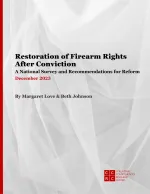
Read moreRestoration of Firearm Rights After Conviction: A National Survey and Recommendations for Reform (Dec. 2025)
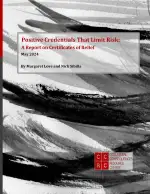
Positive Credentials That Limit Risk: A Report on Certificates of Relief (June 2024)
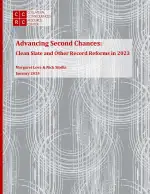
Advancing Second Chances: Clean Slate and Other Record Reforms in 2023 (Jan. 2024)
Accessing SNAP and TANF Benefits after a Drug Conviction: A Survey of State Laws (Dec. 2023)
The Many Roads from Reentry to Reintegration (March 2022)
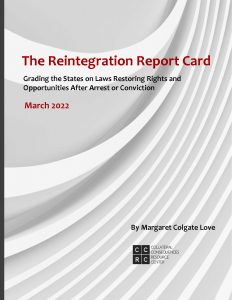
The Reintegration Report Card